Rainy Season Drainage Warning Signs in St. Augustine
Heavy afternoon rain is part of life in St. Augustine. Short storms can dump a lot of water in just a few minutes, and your yard has to soak it up fast. When that does not happen, you start to see standing water, soggy spots, and messy runoff that slowly kill good turf.
We are going to walk through what those warning signs look like, why they are so tough on St. Augustine lawns, and a few simple checks you can do as a homeowner. Catching problems early helps protect your grass, your landscape, and your outdoor spaces before they turn into bare mud or weed patches.
How North Florida Rains Quietly Ruin a Good Lawn
In North Florida, we get a common pattern: a hot day, quick dark clouds, then a fast, heavy storm. The ground gets hit with a lot of water all at once. If the soil is healthy and open, the water sinks in, then sun and humidity dry things out.
When drainage is poor, that same pattern starts to hurt your lawn. Here is why:
Fast storms put more water on the yard than compacted soil can absorb
Water collects in low spots and along hard edges like driveways and patios
Sun comes back out and the top layer warms up while roots sit in soggy soil
Even though our native soils are sandy, they can still hold water when:
The top few inches are packed tight from foot traffic or mowers
There is a layer of clay or construction debris under the surface
Thick thatch under St. Augustinegrass blocks water from moving down
Too much moisture sets off a chain reaction you will often see around local homes:
Root rot and thinning turf in low, soggy zones
Brown Patch or Large Patch diseases showing up as circles or patches after rainy weeks
More weeds, especially sedges and moisture-loving types, moving into weak turf
Good lawn care in St. Augustine is not just about fertilizer and mowing. Drainage and irrigation both have to be in balance. If your yard stays wet for long stretches in rainy season, even the best lawn treatments will struggle to keep grass full and healthy.
Spotting Drainage Red Flags in Your Yard
Rainy season is the best time to spot problems, because water shows you exactly where your yard is holding or shedding moisture. Some warning signs are easy to spot if you know what to look for.
Pay close attention to:
Puddles that stick around more than 24 to 48 hours
Ground that feels mushy or spongy when you walk across it
Water flowing across the lawn and off onto sidewalks, driveways, or a neighbor's yard
Exposed roots, washed-out mulch, or bare streaks of soil after storms
Each sign points to a different issue:
Puddles in one area usually mean a low spot or poor grading
Mushy, bouncy ground often points to compacted soil holding water at the surface
Runoff across hard surfaces can mean the yard is sloped the wrong way or soil is sealed tight
Washouts and moving mulch can mean fast-moving water has no controlled path to follow
A few simple habits help you catch these patterns:
Walk your yard in old shoes right after a storm and notice where your feet sink or splash
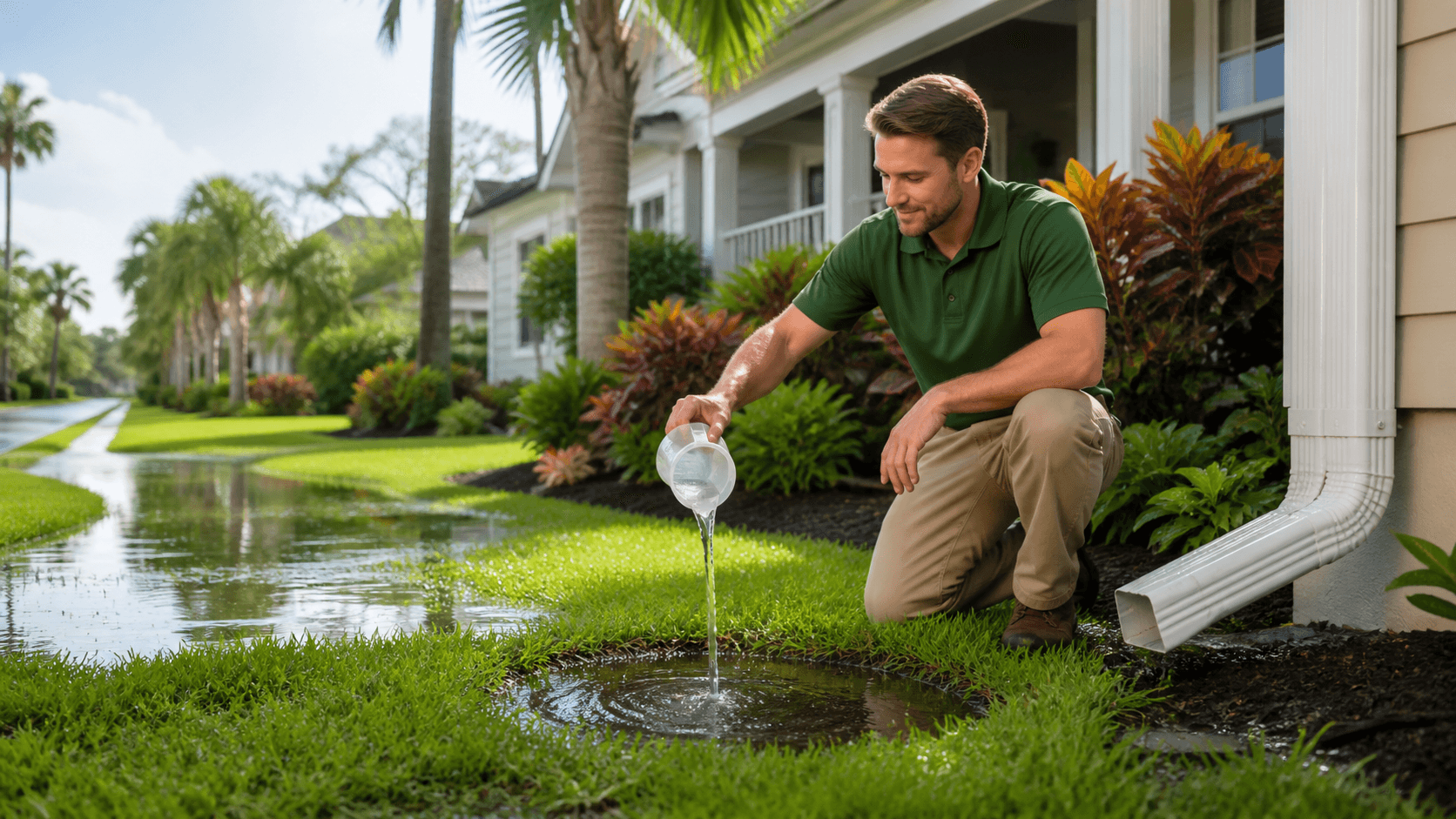
Look around each downspout and see if those spots stay wetter than the rest of the yard
From your front door or back patio, watch which way water flows and where it gathers
Seeing some shallow water right after a big storm can be normal. The real concern is when the same places stay soggy day after day, even when the rest of the yard has dried out.
Simple Homeowner Tests Before You Call a Pro
You do not need fancy tools to get a first look at how your yard drains. A few simple tests give good clues about what is going on under the grass.
Try these easy checks:
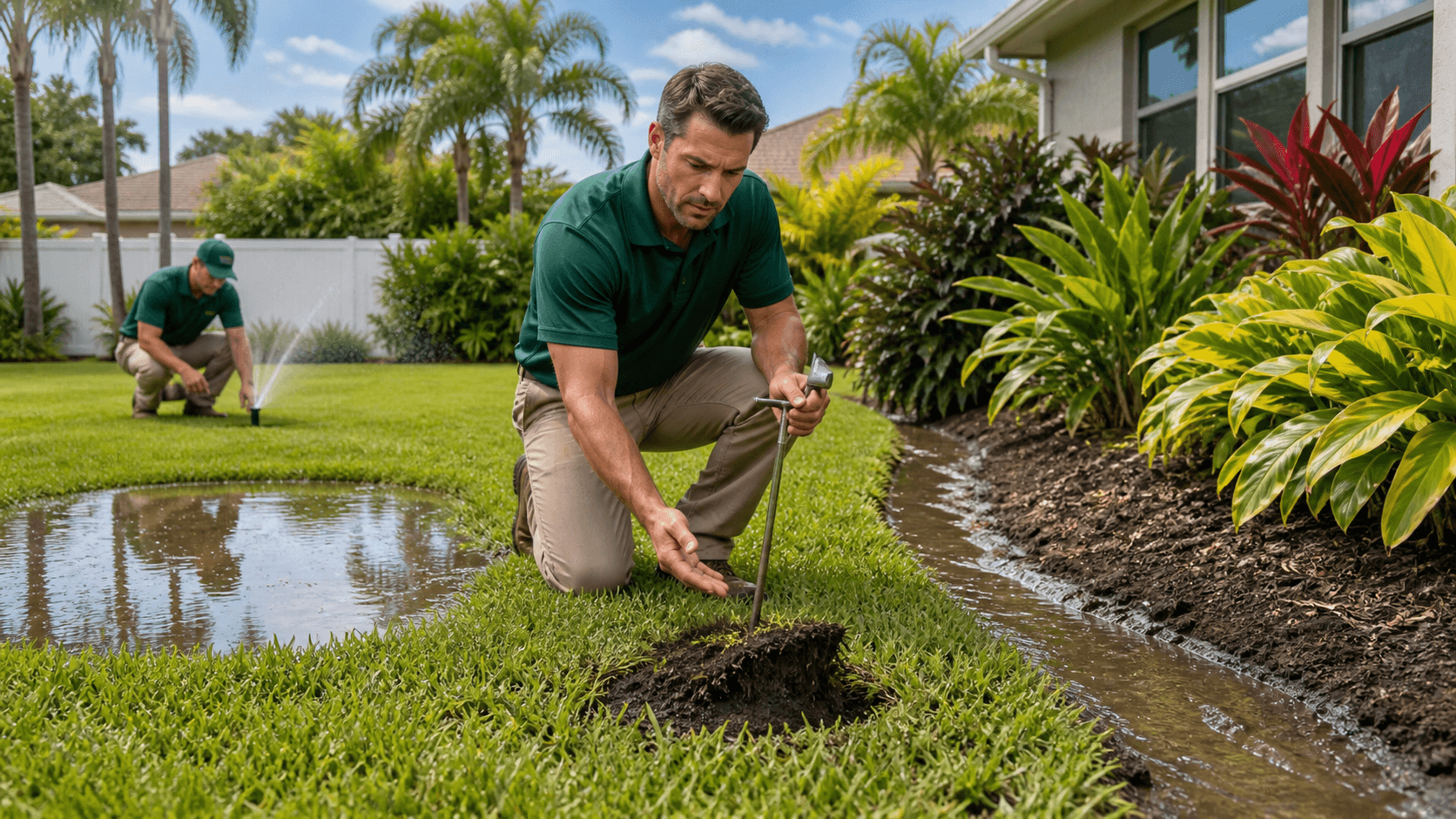
Screwdriver test
Take a long screwdriver and push it straight down into the soil in a problem spot. If it slips in 6 to 8 inches with steady pressure, the soil is probably open enough. If it feels like you are pushing into concrete, that hints at compaction, which slows drainage and keeps roots shallow.
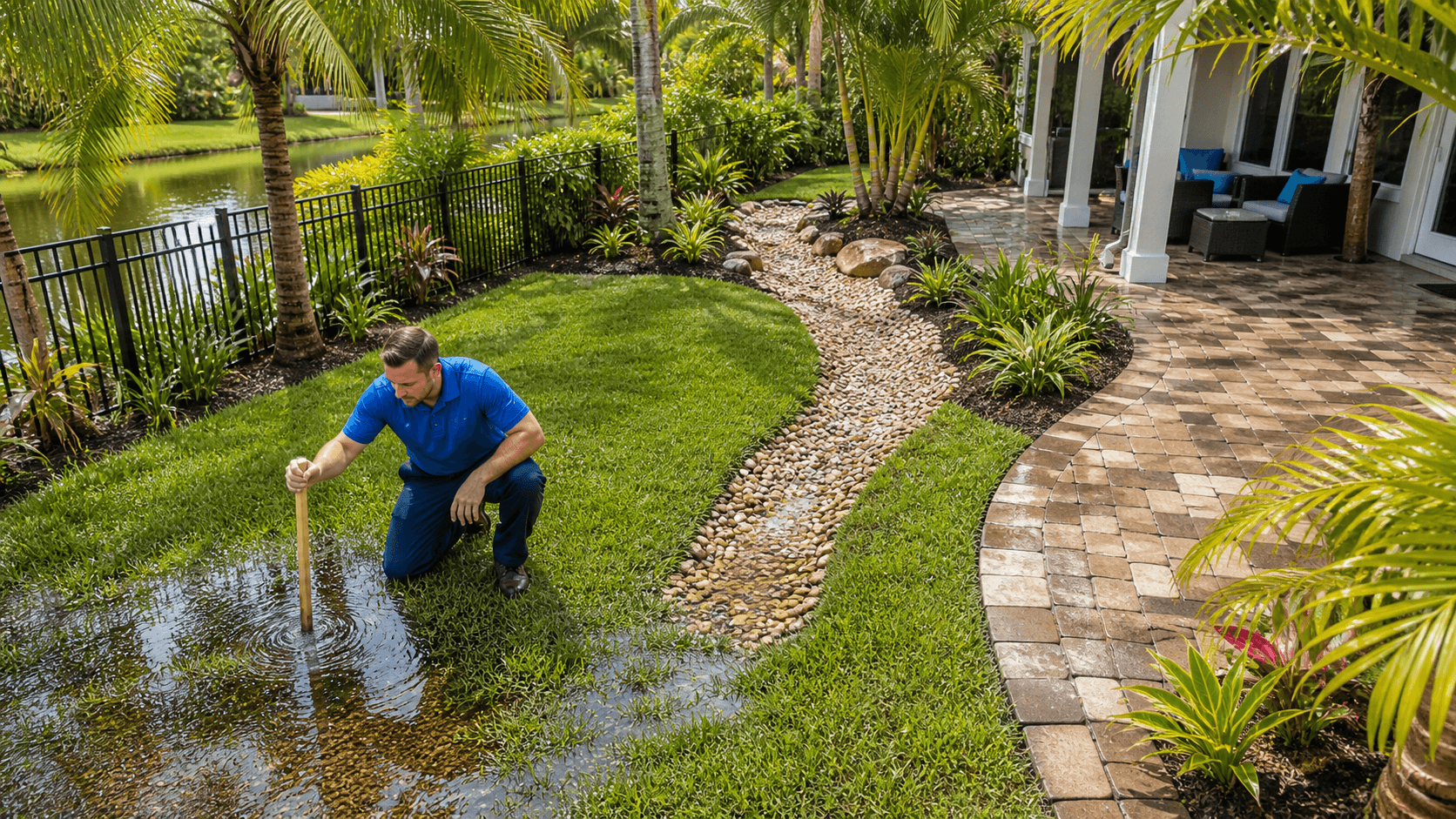
Fence-post test
In a low spot that holds water, stick a thin stake or post in the ground and mark the water line after a storm. Check it over the next couple of days. If the water level drops within a day, the area may just be a shallow dip. If water barely moves after 48 hours, the soil is likely holding too much moisture.
Hose test
On a dry day, run a hose at a slow to medium flow in an area where runoff usually starts. Watch where the water naturally travels. This makes grading problems very clear and shows you where water will always try to go during storms.
From these tests, you may learn that:
Certain zones are compacted and need the soil opened up
Downspouts are dumping water right into a low area
Water from one side of the yard is racing toward the same weak spot every time
Simple changes like improving soil structure, redirecting downspouts, or adjusting irrigation away from already wet zones can sometimes help. It is also smart to cut back on watering when rains are frequent, and to watch for turf color changes where water lingers, since that is where disease often starts. If water is standing for days or pooling close to the house, though, that usually calls for professional help.
When It Is Time for Professional Drainage Help
Some drainage problems are more than a weekend project. Those are the ones that tend to come back every rainy season and cost you turf, plants, and peace of mind.
Clear signs you should bring in a professional include:
Water consistently standing near the home's foundation, patio, or pool deck
The same sections of lawn dying out or turning into mud year after year
Strong runoff that washes away mulch, soil, or exposes irrigation lines
Ongoing drainage issues in the same areas where lawn disease or chronic weeds keep popping up
A local lawn and landscape team can look at the whole picture: grading, soil type, turf health, and irrigation. Depending on what they find, solutions might include:
Regrading subtle low spots so water has a better path to follow
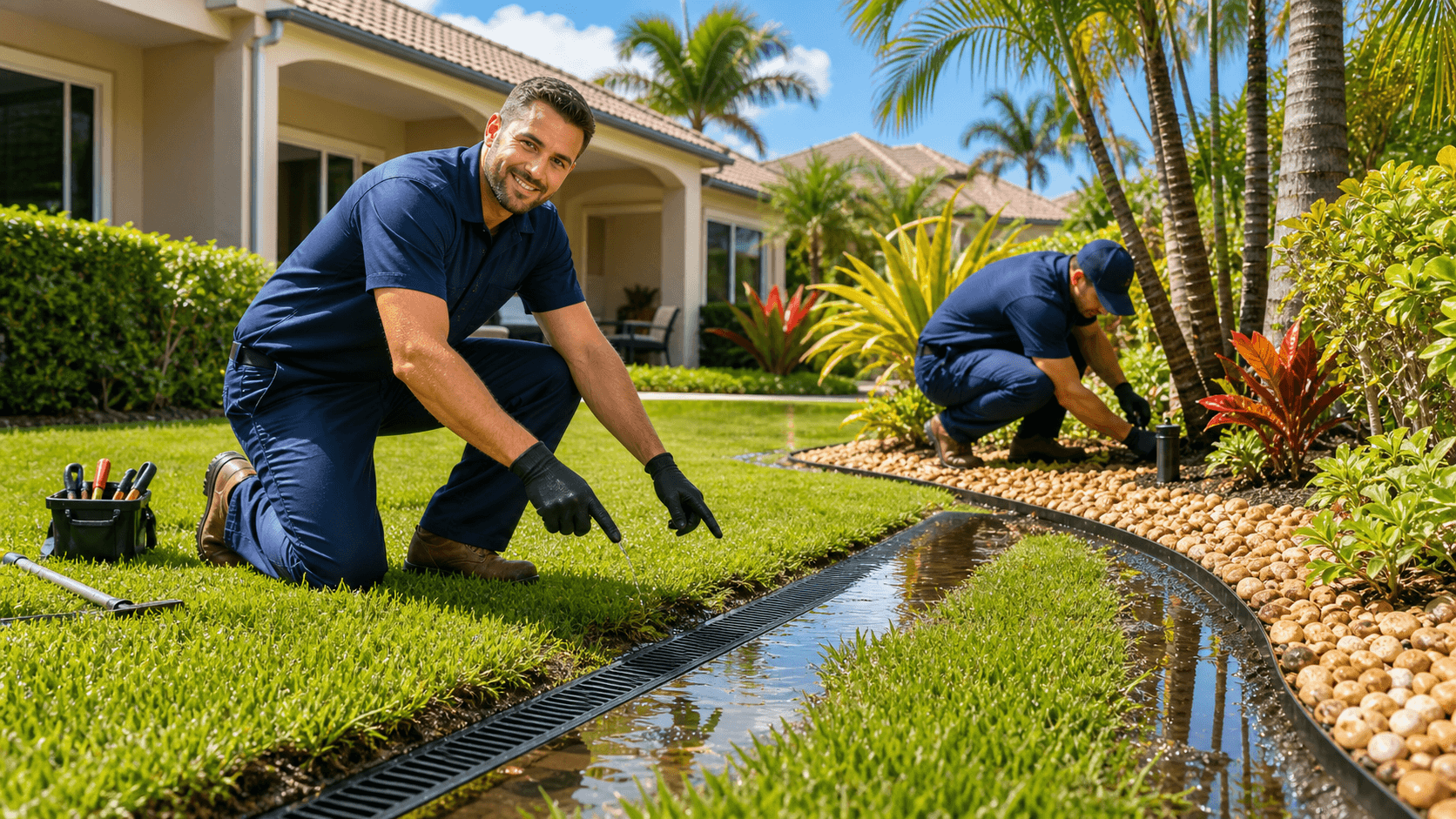
Adding French drains or catch basins to move water to a safer place
Tying gutters and downspouts into drainage so roof water does not dump into your lawn
Improving soil and opening it up, then pairing that with fertilizer and care that match St. Augustinegrass and North Florida conditions
The goal is simple: a yard that is safe for kids and pets, dry enough to enjoy after storms, and covered in healthy grass instead of mud or weeds. Local teams that work daily in North Florida are used to our sandy soils, low areas, and irrigation-heavy neighborhoods, so they can tailor fixes to our rain patterns and turf types.
Protect Your Lawn Before the Next Big Storm
Drainage problems rarely fix themselves. Left alone, they slowly turn good turf into thin, weak patches that never quite dry out. The good news is that if you catch standing water, soggy areas, and runoff early, you can usually protect your lawn and avoid bigger headaches.
As rainy season builds, a quick checklist helps:
Walk your yard after the first few big storms and note any repeat puddles
Watch for muddy paths where feet or paws always track through the same soft spots
Turn irrigation down or off for a bit when storms are frequent
Keep an eye on St. Augustinegrass in wet zones for early signs of disease or stress
Start with the simple tests above to understand what is happening in your yard. If the problems look bigger than a few small tweaks, a local lawn care and drainage expert can look at your lawn, drainage, and irrigation together and build a plan that fits your yard and your goals. In North Florida, where heavy rain and St. Augustinegrass go hand in hand, that extra attention to drainage is what keeps a lawn healthy year after year.
Transform Your St. Augustine Lawn Into a Space You Love
If you are ready for a healthier, greener yard, we are here to help every step of the way. Learn how our customized lawn care in St. Augustine can address the specific challenges your property faces. At The Master's Lawn & Pest, we focus on long-term results so your lawn looks great season after season. Reach out today and contact us to schedule your next service.