Give Your St. Augustine Lawn a Strong Summer Start
Early summer is a make-or-break time for lawn care in St. Augustine. The heat, humidity, and coastal storms all start to ramp up, and your grass has to keep up. St. Augustinegrass is shifting from its easy spring growth into stress season, when small problems can spread fast.
When lawns in our part of North Florida hit this point, color, thickness, and root health are on the line. A few smart moves now can mean the difference between a deep green yard and a thin, spotty one by the end of summer. We will walk through simple, local tips that match our sandy soils, salty air, and heavy downpours.
At The Master's Lawn & Pest, we build our lawn care in St. Augustine around these same early-summer priorities, adjusting for each yard's conditions so the grass can stay strong through months of heat and use.
Watering Wisely in North Florida Heat
Watering is where many good lawns go bad in early summer. In our climate, timing and amount matter as much as how often you run your system.
For most established St. Augustine lawns, early-morning watering is best. The cooler temps and lower wind help water soak in, instead of evaporating. Grass has time to dry during the day, which lowers the chance of fungus.
General guidelines for early summer watering:
Water in the early morning, not at night
Aim for about 2 watering days per week for most established lawns, based on local rules
Adjust run times so you apply roughly 3/4 inch of water on each watering day, instead of a light sprinkle every day
St. Augustine's sandy soil drains quickly, but our summer storms can dump a lot of water at once. That combo can trick homeowners into overwatering. The surface may look dry the next day, but the root zone might still be wet.
A few simple checks can help:
Use a rain sensor on your irrigation to skip cycles after storms
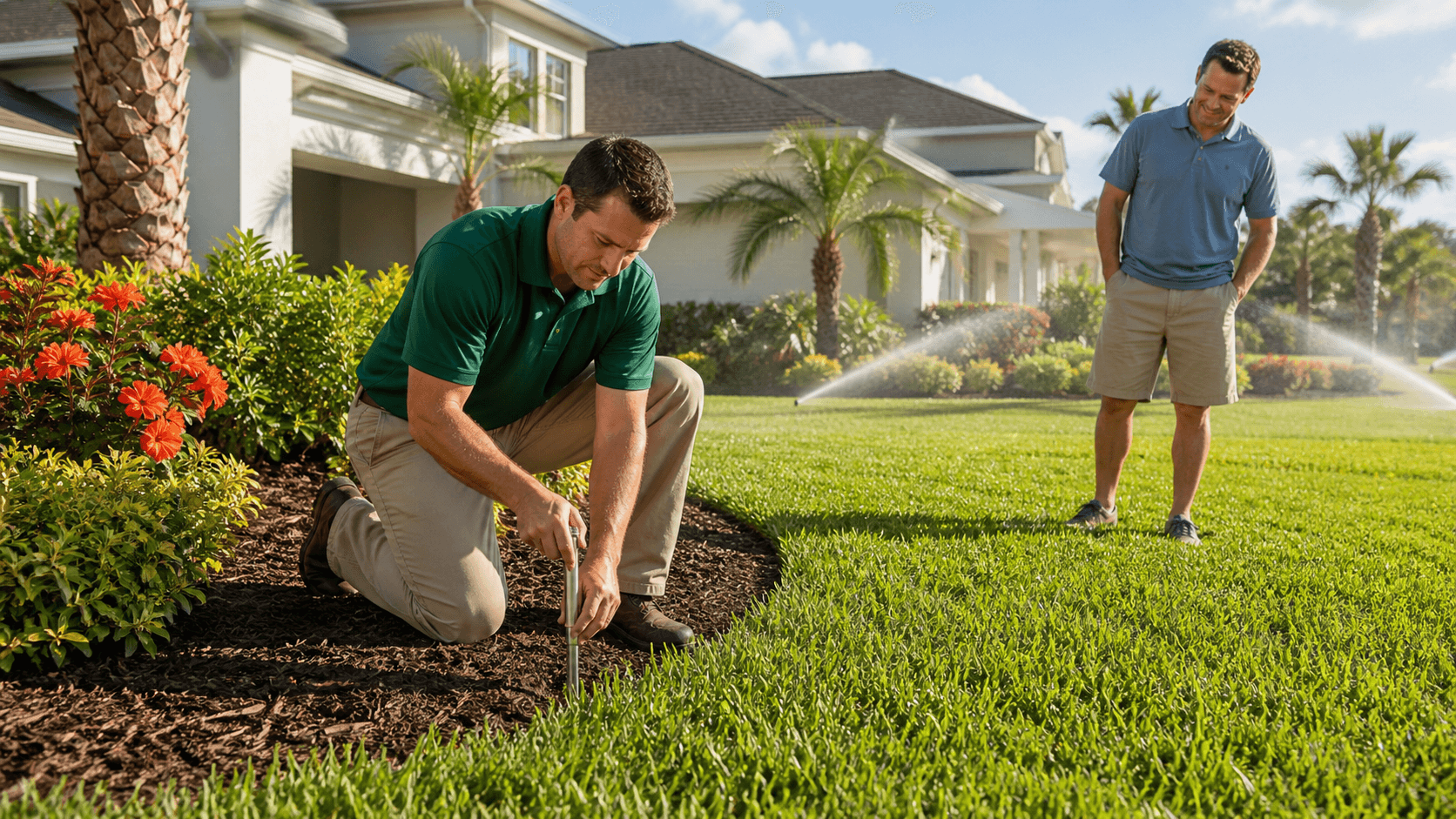
Set out a shallow can, like a tuna can, to see how much water each zone puts down
Push a screwdriver into the soil. If it goes in easily and feels cool, the soil likely still has moisture.
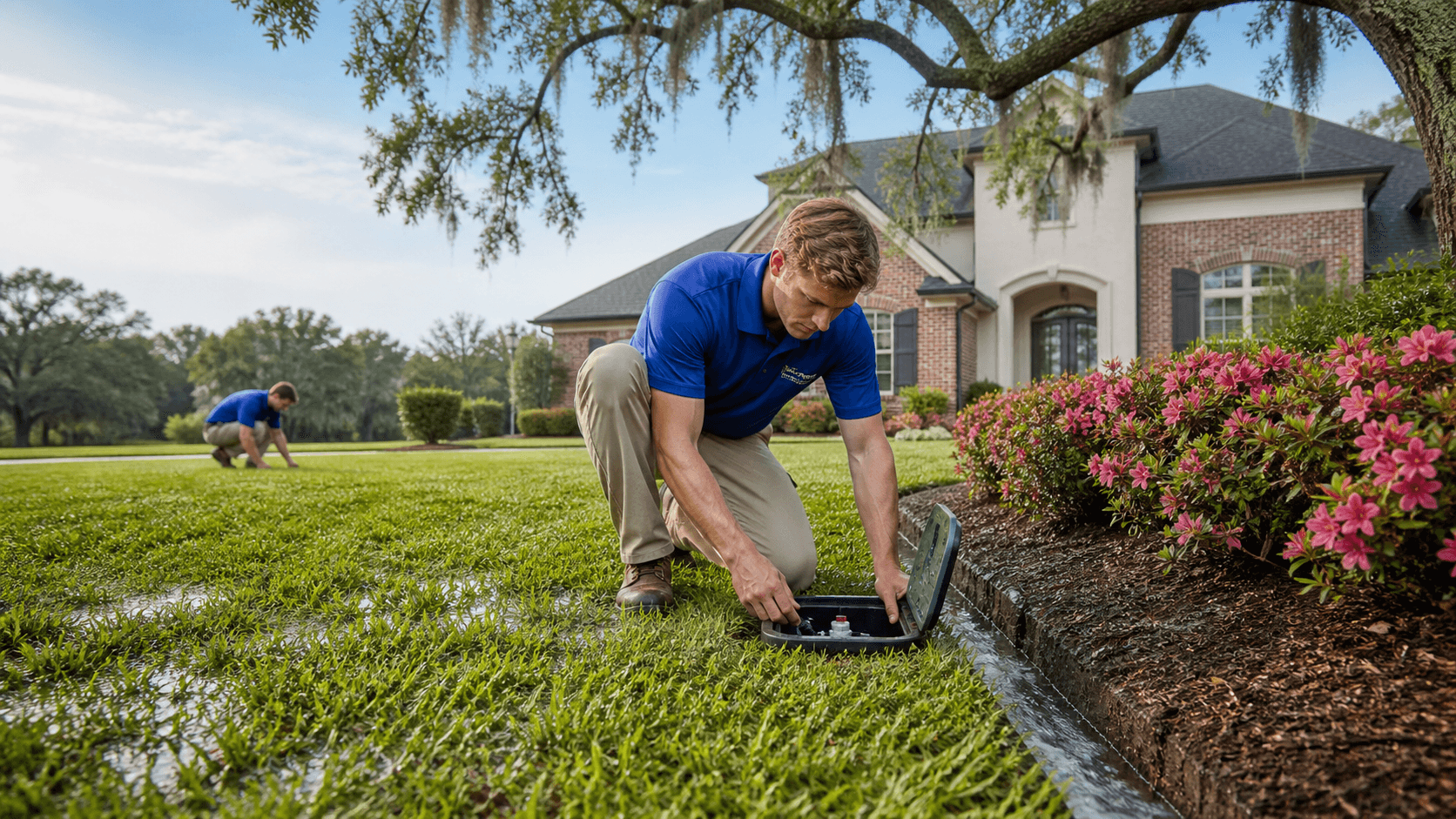
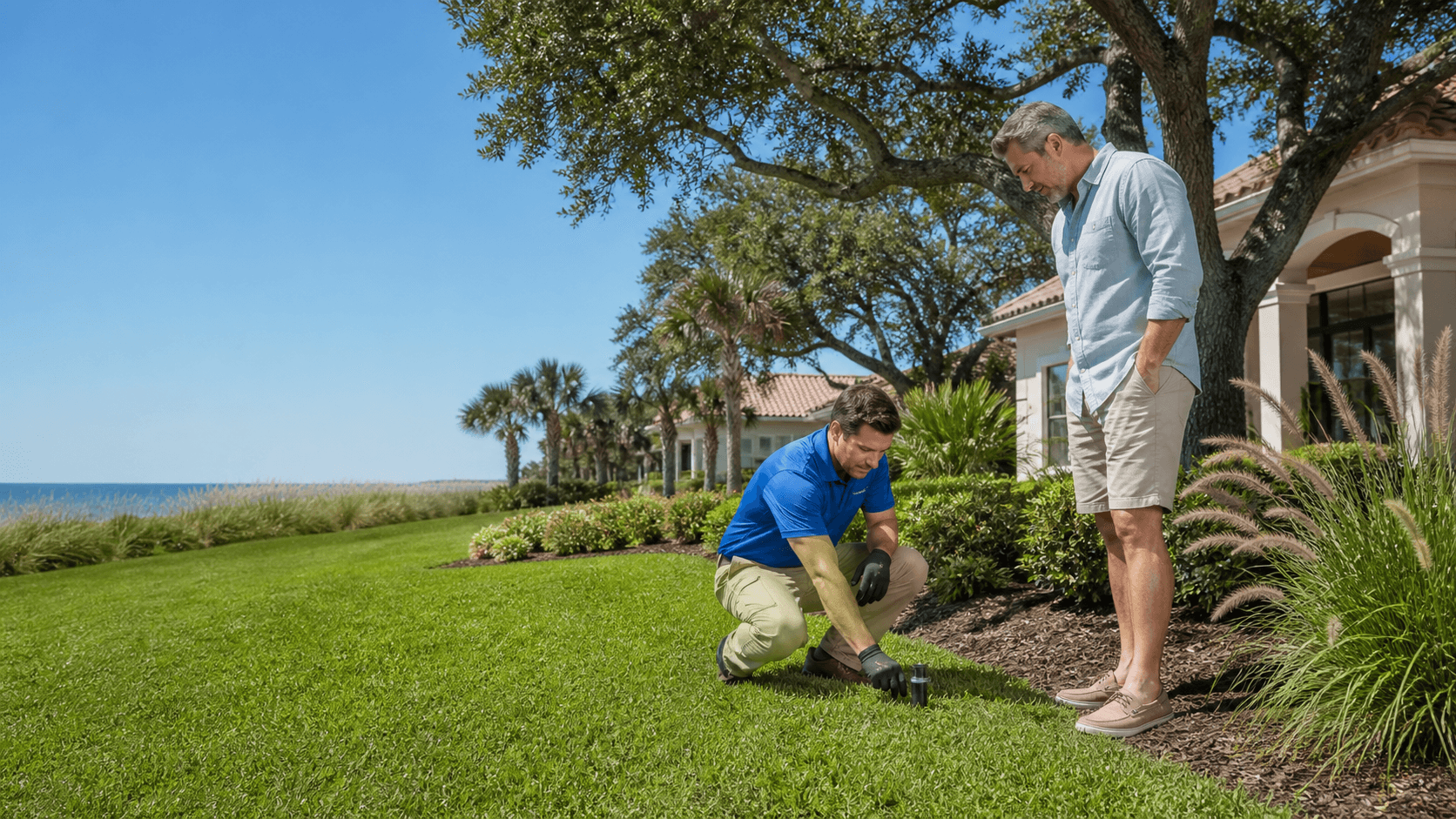
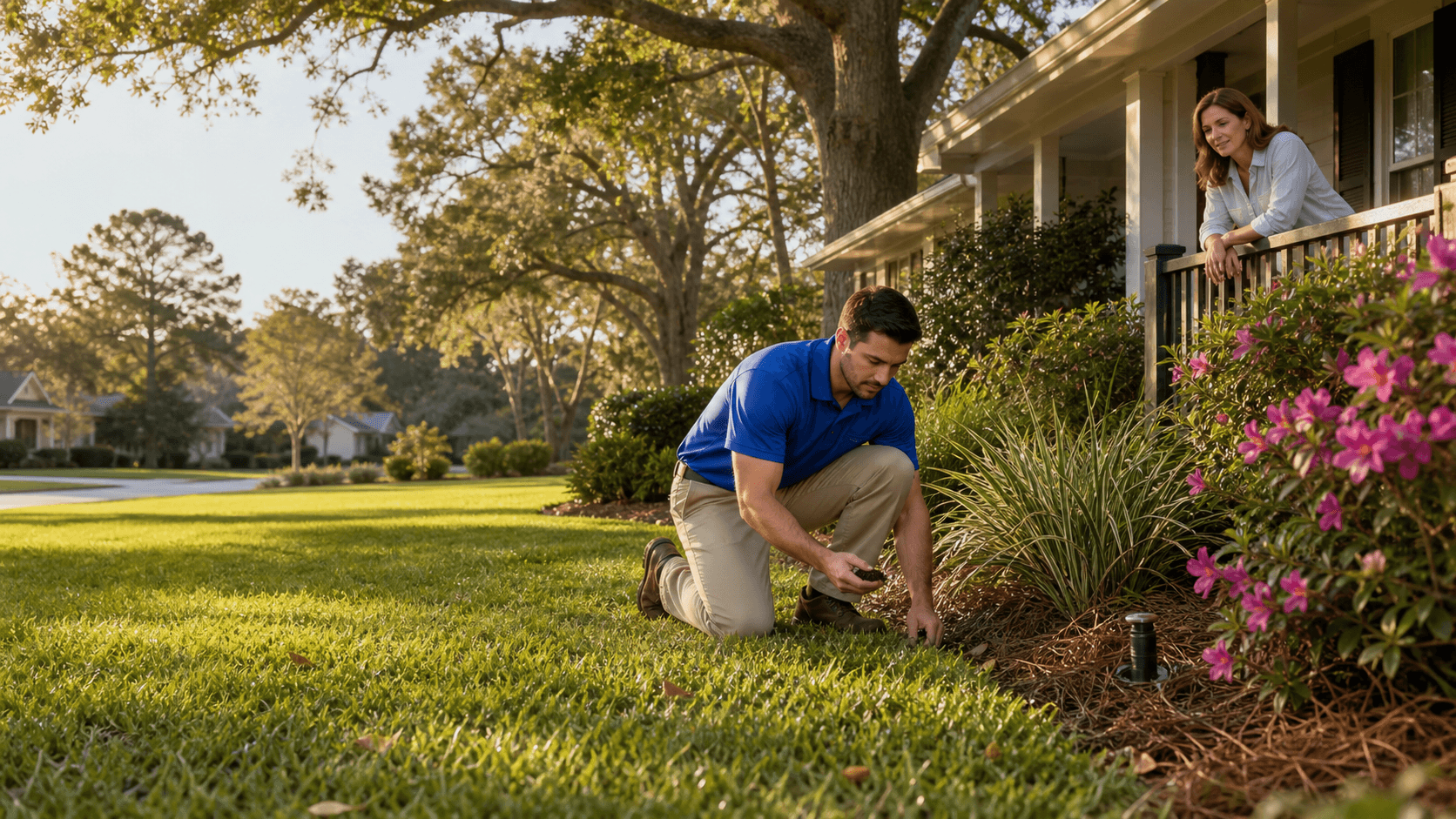
This is also a great time for a sprinkler checkup:
Heads that are clogged or stuck
Spray patterns that hit sidewalks or the street instead of the lawn
Gaps between heads that cause dry "hot spots"
Those dry areas often look like insect or disease damage, but are really watering issues. Our team spends a lot of time helping homeowners sort out those differences so the right problem gets fixed.
Feeding Your Lawn for Color and Stress Resistance
Early summer feeding gives St. Augustinegrass the strength it needs for long, hot days and heavy use from kids, pets, and backyard gatherings. The goal is steady nutrition, not a quick growth burst.
Too much fertilizer, or the wrong blend for our area, can:
burn the turf
Cause soft, surge growth that invites insects and disease
Wash through sandy soil before the lawn can use it
Lawns near the St. Johns County coast deal with salty air and sandy, fast-draining soil. Generic big-box fertilizers rarely account for that. Local, custom-blended fertilizers are designed for our conditions, with:
Slow-release nitrogen for steady feeding
The right balance of potassium for stress tolerance
Key micronutrients matched to our soil tests
Signs your lawn may be hungry instead of just dry or diseased include:
An overall pale or yellow-green color, not just in patches
Uneven growth, with some areas staying thin even with water
Slow recovery after mowing or foot traffic
A good early-summer plan often pairs fertilizer with iron or micronutrient products. That helps deepen the green color without forcing a lot of extra top growth that needs constant mowing. Professional lawn care programs in St. Augustine are built around that balance.
Stopping Weeds, Fungus, and Insects Before They Take Over
Once heat and rain kick in, weeds, fungus, and insects are ready to explode. Getting ahead of them is much easier than trying to fix a yard that is already covered in damage.
Some of the common early-summer weeds in our area include:
Crabgrass in sunny, thin spots
Sedges in wetter, low-lying parts of the yard
Spurge in open, stressed areas and along borders
Pre-emergent weed controls target weeds before they sprout, while post-emergent products are used on weeds that are already visible. Timing late spring into early summer matters, because once weeds get established, they compete hard with your turf.
Our coastal humidity and evening thunderstorms also create perfect conditions for lawn diseases like brown patch or large patch, and gray leaf spot. Helpful prevention tips include:
Keeping St. Augustinegrass at the right mowing height, not scalped
Avoiding late-evening or nighttime watering
Watching for early signs like circular brown areas, yellow edges around spots, or small gray or brown lesions on blades
Chinch bugs are another big threat to St. Augustinegrass, especially in hot, sunny areas near driveways and sidewalks. Homeowners often confuse chinch bug damage with drought.
Typical chinch bug signs:
Dry-looking patches in the hottest parts of the yard
Damage that spreads outward from a center point
A mix of dead grass in the middle and wilting grass on the edges
Once chinch bugs are active, professional, labeled treatments are usually needed. Our lawn programs in St. Augustine include proactive monitoring for insects and disease so issues are caught early.
Mowing Practices That Help Your Lawn Beat the Heat
Mowing might feel simple, but how you mow St. Augustinegrass in early summer can protect, or stress, your lawn.
Cutting too short is one of the fastest ways to thin this grass. It exposes the soil, dries out the root zone, and opens space for weeds and pests. In early summer, raising the mower slightly helps shade the soil and hold moisture.
For most St. Augustine lawns, we recommend:
A higher mowing height in the warmest months
Mowing often enough that you remove no more than one-third of the blade each time
Adjusting frequency after heavy rain so grass does not get too tall between cuts
Sharp blades are also important. Dull blades tear the grass, which makes the lawn look ragged and more prone to disease. A quick blade sharpening before the hottest stretch of the year helps keep cuts clean.
Clippings can actually help your lawn if handled the right way. It is usually best to:
Leave fine clippings on the lawn to recycle nutrients
Avoid mowing when grass is wet, which causes clumping
Bag or rake only when clippings are thick and heavy
Neat edges along driveways, walkways, and flower beds give your yard a finished look. Light, regular edging keeps grass from creeping into beds without cutting too deep into the turf.
Protecting Your Yard, Kids, and Pets From Outdoor Pests
Early summer in St. Augustine also means more mosquitoes, fire ants, and other biting pests right where your family wants to spend time. Warm, wet conditions and thick vegetation create easy hiding spots for them.
Common problem areas around North Florida homes include:
Standing water in buckets, plant saucers, or toys
Dense shrubs and overgrown foundation plantings
Thatch build-up and unmowed corners of the yard
Fresh, growing fire ant mounds in open turf
Homeowners can reduce pest pressure by:
Emptying or dumping any containers that hold water after rain
Trimming thick shrubs back from patios, play areas, and walkways
Managing thatch and keeping turf maintained so it dries between waterings
Watching for new ant mounds and avoiding disturbing them before treatment
Product choice and application timing matter, especially for families with kids and pets. Labels exist for a reason, and it is important that treatments are applied correctly and in the right places.
Professional pest control can help create a more comfortable yard with:
Exterior perimeter sprays to limit pests coming toward the home
Yard-wide fire ant programs for long-term mound control
Targeted mosquito reduction services around shaded, moist areas
At The Master's Lawn & Pest, licensed technicians work with local insect cycles and conditions. We coordinate lawn care in St. Augustine with pest treatments so they support each other and do not cause conflicts.
Keeping Your Lawn Looking Great All Summer Long
The key early-summer priorities come down to a few simple pillars: smart watering, stress-ready fertilization, weed and disease prevention, good mowing habits, and thoughtful pest protection around your home. Together, these steps help your St. Augustine lawn stay thicker, greener, and more resilient when the season is at its toughest.
You do not have to overhaul everything at once. Many homeowners in our area pick one or two things to improve this month, like dialing in the irrigation schedule and raising the mowing height a notch. Those small, consistent changes now can prevent big, costly problems later in the summer. At The Master's Lawn & Pest, we live and work in the same North Florida conditions you do, and we build our lawn programs around helping yards stay healthy and enjoyable all season long.
Transform Your St. Augustine Lawn Into a Space You Love
If you are ready to have a healthier, greener yard without the stress of maintaining it yourself, we are here to help. At The Master's Lawn & Pest, our customized lawn care in St. Augustine plans are designed around your property's unique needs. Reach out today and let us take care of the details so you can simply enjoy your outdoor space, or contact us with any questions about getting started.