When North Florida Rains Will Not Let Up
Heavy afternoon storms are part of life in Gainesville, St. Augustine, Palm Coast, and nearby areas. When those storms line up for days, your lawn can start to look rough fast. You might see standing water, yellow or thinning grass, mushrooms in the yard, and start wondering what kind of long-term damage is happening under the surface.
Our North Florida lawns react this way for a reason. Some yards sit on loose, sandy soil that drains too fast once it finally lets water through. Others were built on compacted fill dirt that holds water on top. Add thick thatch in St. Augustinegrass and our constant humidity, and you get soggy, stressed turf.
We like to keep it simple: triage first, fix second. Right after heavy rain, you want to check for safety issues, spot the worst drainage trouble, and keep kids and pets away from risky areas. Then you can start thinking about grading, drainage, fungus prevention, and when it is time to bring in a local drainage or irrigation pro who knows lawn care in Gainesville and surrounding communities.
First 48 Hours: Post-Storm Lawn Triage
Once storms have passed and it is safe to go outside, a quick walk through the yard tells you a lot. You are not trying to solve everything on day one. You are just learning where the real problems are.
Start with a simple safety and damage check:
- Look for washouts, exposed roots, and spots where the ground feels like a sponge under your feet.
- Note any puddles that stick around more than 24 to 48 hours after the rain stops.
- Pay close attention to areas near your foundation, pool, patio, or screened porch where water is pressing against hard surfaces.
Next, look for drainage red flags that show how water is trying to move across your property:
- "Repeat offender" spots that always stay wet.
- Low areas at the ends of driveways and sidewalks.
- Places where downspouts dump water into the yard.
- Landscape beds with solid edging that traps water instead of letting it flow out.
There are a few quick steps that are usually safe for homeowners to handle without getting into big projects:
- Gently rake away leaves, pine straw, and thatch mats that are holding water on the surface.
- Clear visible clogs from surface drains, pop-up emitters, and shallow swales at your property line.
- Take photos while everything is still wet so you can remember exactly what it looked like when you later talk with a drainage or irrigation technician.
What Standing Water Hotspots Are Telling You
When certain spots stay soggy long after the rest of your lawn dries, your yard is sending you a message. In North Florida neighborhoods, we see a few common causes again and again.
Typical reasons for persistent puddles include:
- Compacted construction fill in newer subdivisions.
- Settling around driveways, sidewalks, or old utility trenches that creates hidden bowls.
- Downspouts, A/C drain lines, and pool overflow lines all emptying into the same patch of turf.
Sometimes a small grading tweak is enough in minor areas. Homeowners can:
- Use a long level or a tight string line to see which way the ground actually slopes.
- Add a little topsoil or sand in very shallow low spots to help water move in the right direction.
- Redirect downspouts with simple extensions or splash blocks so water spreads out instead of pounding one corner.
- For tiny trouble zones, a shallow swale or decorative dry creek bed with stone can help guide water away.
But there is a clear line where do-it-yourself work should stop. It is smart to call a drainage pro when:
- Water stands within 10 to 15 feet of your home or pool deck.
- Puddles last more than 48 hours again and again, not just after extreme storms.
- Fixes would need French drains, catch basins, or tying into an existing drainage system.
- The wet areas overlap with irrigation problems like broken heads, poor coverage, or low spots around sprinklers.
Soil Compaction, Sandy Soils, and Struggling Roots
Many North Florida lawns deal with a double problem: they stay soggy on top after rain, then dry out too fast when the sun comes back. That sounds strange, but it is common when you have a thin layer of sand sitting on compacted clay or fill dirt.
Here is what usually happens:
- Water hits sandy topsoil and soaks in quickly at first.
- It hits that tight, compacted layer and starts to sit there.
- Foot traffic, mowers, and old construction equipment make the top few inches even denser.
- Roots end up shallow and weak, and the lawn does not handle stress very well.
You can tell soil is a big part of the problem if:
- Your yard puddles after every moderate rain, even when neighbors' yards clear up fast.
- The surface turns hard and crusty when dry.
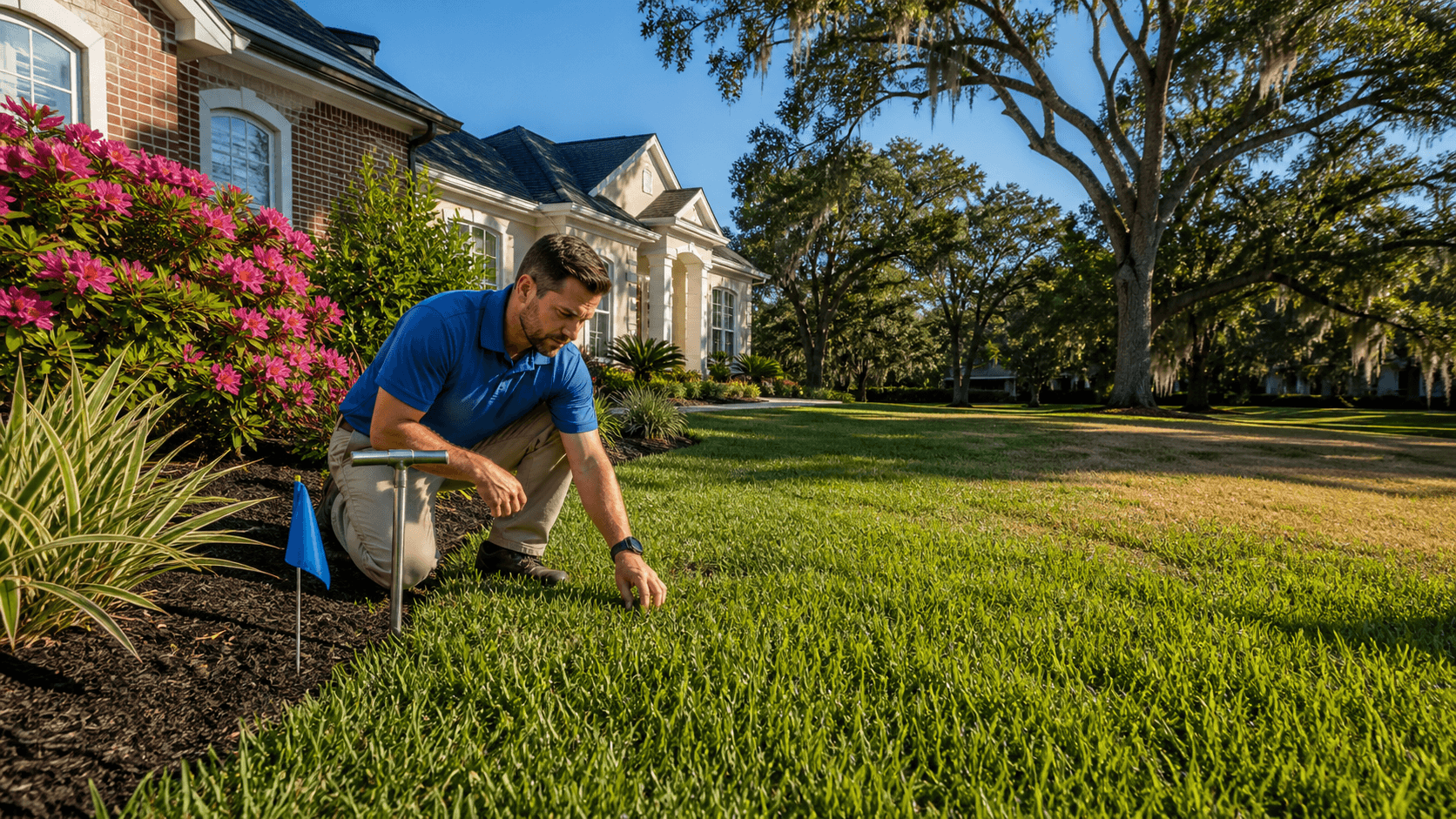
- It is tough to push in a screwdriver or soil probe.
- St. Augustinegrass or zoysia looks thin, with roots hugging the surface and a heavy layer of thatch.
The most effective fixes focus on the root zone:
- Core aeration to remove small plugs of soil, open air pockets, and give water a path down instead of sideways.
- Light topdressing with the right soil blend to slowly improve the top few inches without burying the grass.
- Smart mowing at the right height for your grass type, with sharp blades and no scalping in low spots.
In our area, it is important to time aeration and topdressing around disease pressure and rainy stretches. A local lawn schedule, built for our humidity and common grasses, works better than a generic calendar from another part of the country.
Fungus, Mushrooms, and Rot: Protecting Your Turf
Long wet periods and warm evenings set up perfect conditions for turf diseases in North Florida. Brown Patch or Large Patch loves St. Augustinegrass and zoysia when the grass stays damp for hours.
Things that raise disease risk include:
- Constant leaf wetness from rain stacked on top of regular irrigation.
- Thick thatch that holds moisture right at the crown of each plant.
- Shade and poor airflow from overgrown shrubs or low tree limbs.
Early warning signs to watch for:
- Circular or odd-shaped brown patches with yellow or orange edges.
- Grass that looks slimy, smells rotten, or pulls up too easily at the base.
- Clusters of mushrooms or puffballs after storms, which means there is extra moisture and decomposing organic matter.
- Gray or white cottony growth early in the morning in known trouble spots.
Practical ways to limit damage:
- Turn off irrigation for several days or longer after a soaking rain, and avoid night watering while the lawn is already wet.
- Trim shrubs and raise low limbs to let more sunlight and air reach the turf.
- Keep mower blades sharp and clean, and avoid mowing when the soil is saturated so you do not leave ruts or spread disease.
- When damaged areas spread quickly or cover large sections, a licensed lawn care professional can identify the specific disease and apply targeted fungicides before the turf thins out too far.
Dialing in Irrigation After a Soaking Rain
Many sprinkler systems in our area are set once and forgotten. When heavy rain hits, that regular schedule keeps running, and the lawn never gets a chance to breathe.
Here is how that hurts your turf:
- Roots sit in saturated soil with very little oxygen.
- Grass responds by staying shallow-rooted instead of growing deep.
- Shallow roots mean the lawn stresses faster in dry spells and gets more disease-prone.
A few simple checks help you reset things:
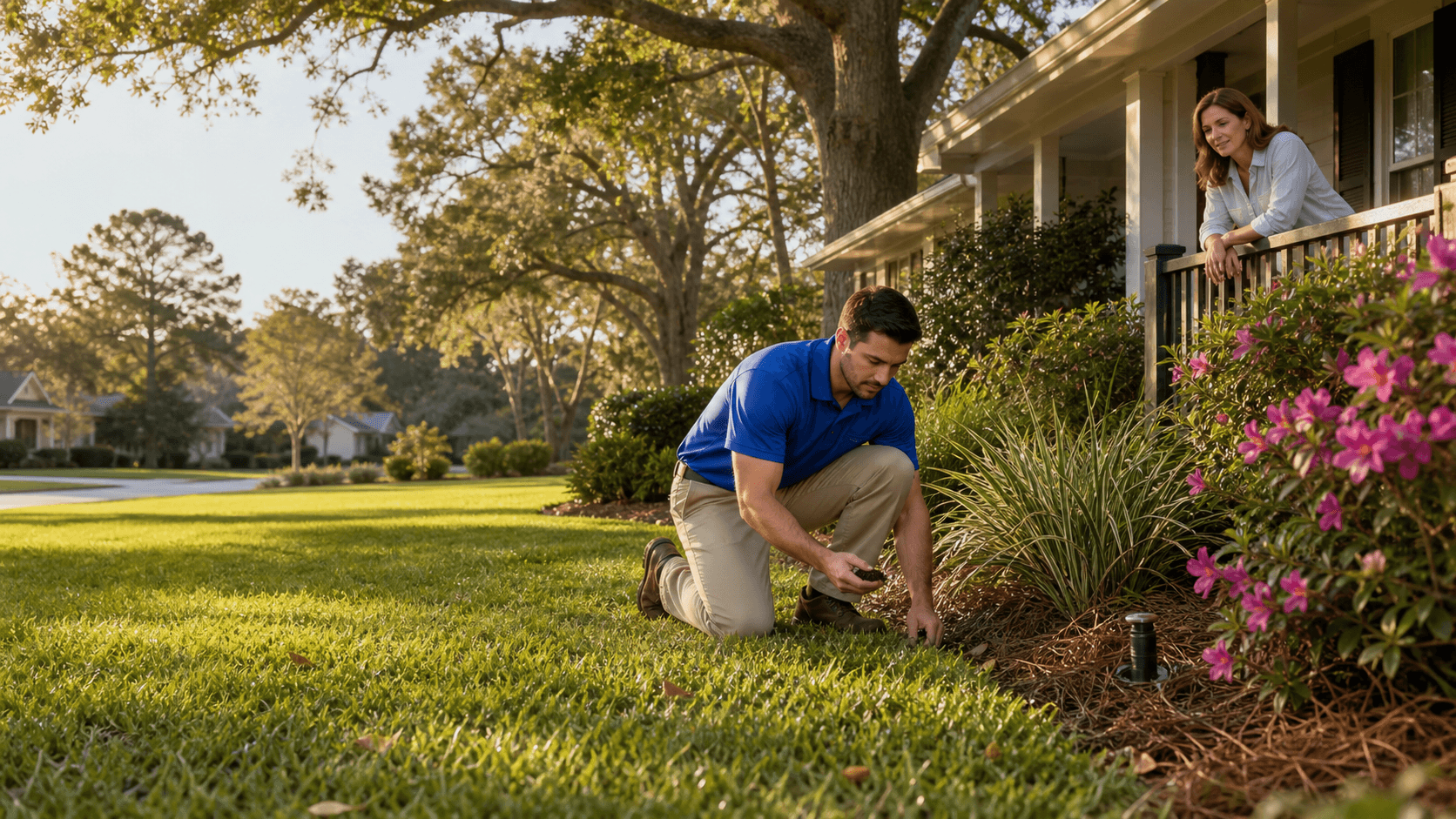
- Use a screwdriver or soil probe to see how deep the soil is wet. If it is damp several inches down, you usually do not need to water yet.
- Test your rain sensor if you have one and make sure it is not covered or broken.
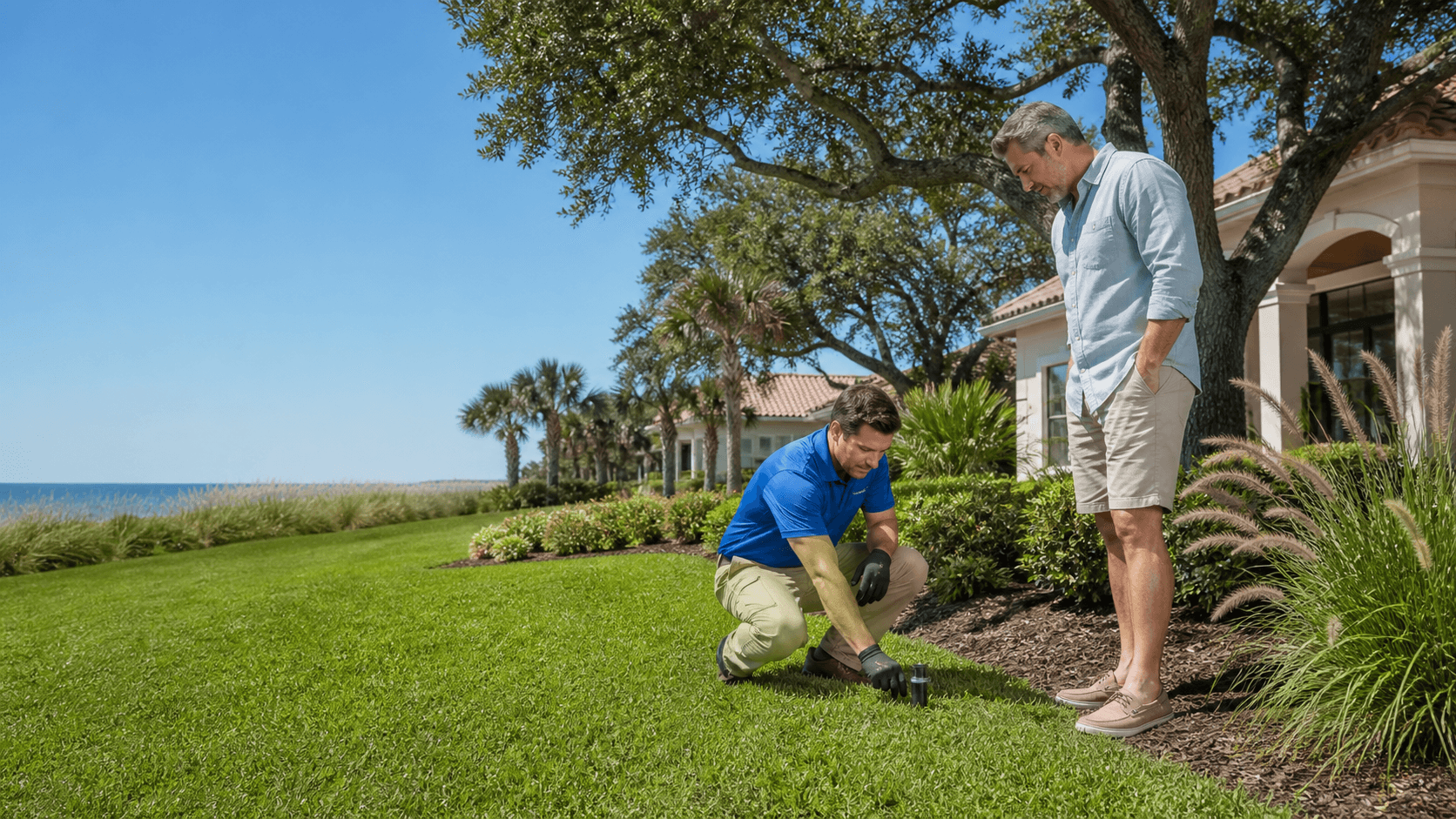
- Walk each zone and look for heads that are stuck, broken risers that shoot water into the air, or low rings around sprinklers where water gathers.
You will want a professional irrigation repair or tune-up when:
- Zones will not turn on or will not shut off.
- Water pressure is low in parts of the yard or some heads never pop up fully.
- Some sections stay soggy while others stay dry, which points to design or coverage problems instead of just run time.
When a Local Drainage Pro Makes Life Easier
Some lawn problems clear up with small adjustments. Others keep coming back every rainy season and slowly wear you down. That is usually when a local drainage and irrigation expert makes life easier.
Situations that usually need more than basic tweaks include:
- Chronic standing water near the house, patio, or pool deck.
- The same area of turf dying out during every wet stretch even after you fix mowing and watering habits.
- Drainage trouble tangled up with complex irrigation zones, landscape beds, or large established trees.
A professional assessment brings the whole property into view. A good drainage and irrigation check typically includes:
- Looking at the grade and runoff paths across your entire yard.
- Checking soil type and compaction in wet and dry areas.
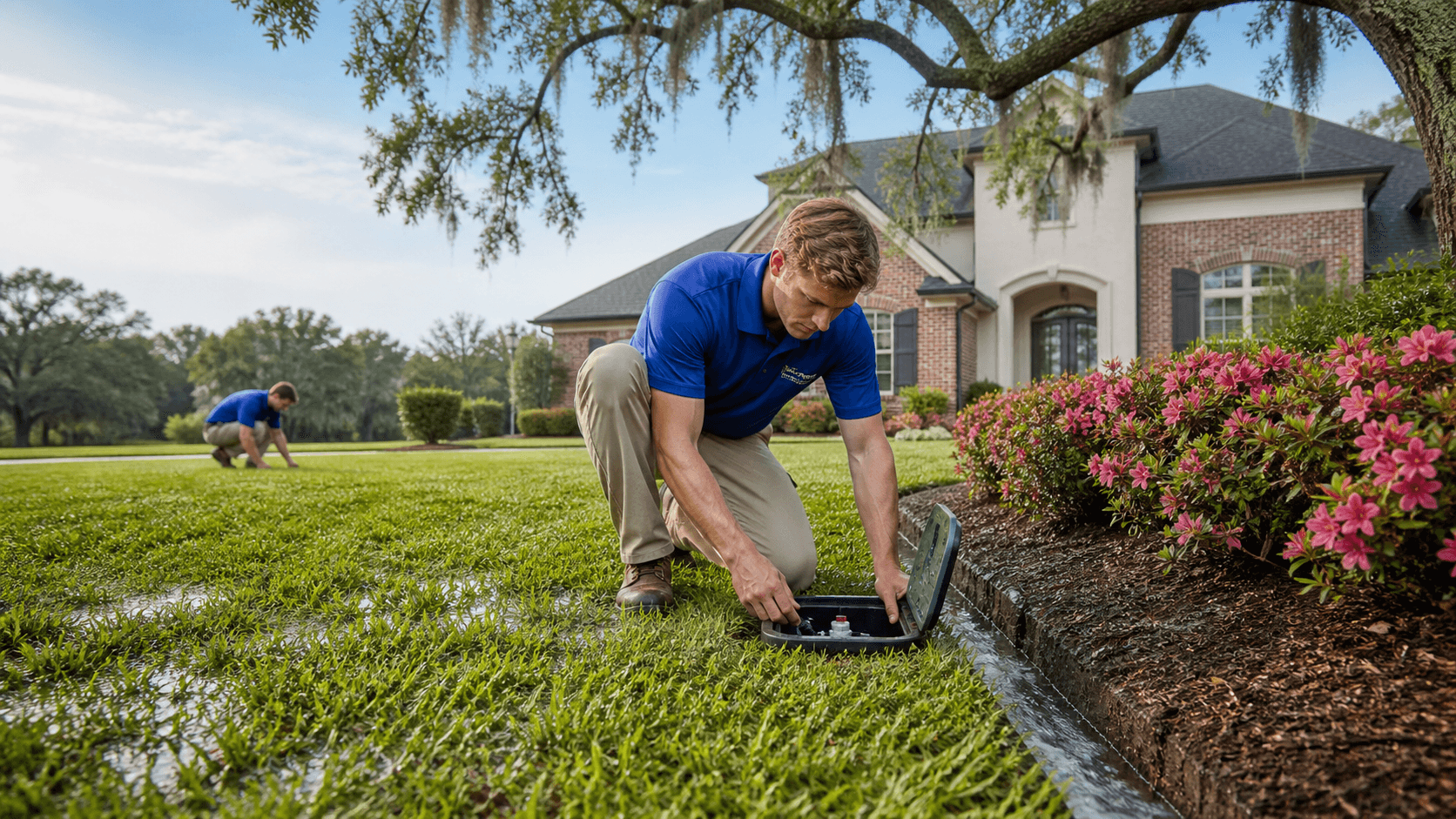
- Testing irrigation coverage, timing, and hardware.
- Inspecting downspouts, pop-up drains, and any existing French drains or catch basins.
- Suggesting a mix of solutions like regrading, surface drains, French drains, downspout reroutes, and irrigation adjustments that fit your specific yard.
At The Master's Lawn & Pest, we work these soggy lawn issues every rainy season across Gainesville, St. Augustine, Palm Coast, and nearby communities. Our team focuses on how drainage, irrigation, and lawn health all connect, so your turf looks good, your foundation stays protected, and your outdoor space is safer for kids and pets after the storms move on.
Enjoy a Healthier, Greener Lawn Without the Hassle
If you are ready to stop struggling with your yard and start enjoying it, let The Master's Lawn & Pest handle the work for you. Explore our customized lawn care in Gainesville to see how we can improve your turf, shrubs, and landscape. We will walk you through your options, answer your questions, and recommend the right plan for your property. When you are ready to schedule or request a quote, simply contact us.