Give Your Gainesville Lawn a Fresh Start After Summer
Late summer in Gainesville and North Florida is tough on grass. We get months of heat, thick humidity, and sudden storms that soak the yard, then leave it baking in the sun. By the time Labor Day has passed, even good lawns can look tired and stressed.
The good news is that the weeks right after Labor Day are a reset window for lawn care in Gainesville. Our soil is still warm, nights slowly get a little cooler, and grass can focus on healing instead of just surviving. With the right steps, your St. Augustinegrass, Zoysia, or Bahia lawn can go into late fall thicker, greener, and with fewer bare spots, weeds, and pests.
As a local North Florida lawn and pest team, we see these patterns every year. In this guide, we will walk through what summer did to your yard, what to adjust in fall, and how to help your grass recover so it looks and feels better for months ahead.
How North Florida Summers Stress Your Lawn
A Gainesville summer stacks stress on your yard for months. By September, that stress finally shows up.
Common summer stress factors include:
- High heat and intense sun for long hours
- Pop-up thunderstorms followed by dry stretches
- Heavy foot traffic from kids, pets, and outdoor fun
- Mowing too low to "keep it short longer"
- Pet spots and traffic near driveways and sidewalks
These add up to problems you can see and feel, like:
- Thinning turf where there used to be a thick carpet
- Pale or yellowing color, especially on sunny edges
- Compacted soil in paths where people or pets walk
- Bare patches near driveways, patios, and mailboxes
- Circles or patches that look waterlogged or burned
In North Florida, we also fight some very specific summer and early fall issues:
- Chinch bug damage in St. Augustinegrass that first looks like dry turf, even when you water
- Mole crickets tunneling in Bahia and Bermuda, causing loose, spongy areas
- Brown Patch or Large Patch disease thriving in warm, damp, overwatered spots
If your lawn looks worse at the end of summer than it did in spring, that is normal around here. What matters now is not ignoring it. If you let these problems sit, winter stress and next spring's growth will be much harder on your yard.
Smart Mowing and Watering Tweaks for Fall Recovery
One of the simplest ways to help your lawn bounce back is to tweak how you mow and water in early fall.
For mowing, we suggest:
- Keep St. Augustinegrass fairly high so it can shade the soil
- Keep Zoysia a bit shorter than St. Augustinegrass, but not "scalped"
- Keep Bahia at a medium height so it can build stronger roots
Raising the mower a notch in September helps the grass:
- Grow deeper roots for better drought resistance
- Shade tiny weeds that are trying to sprout
- Recover from summer damage instead of being cut too hard
Sharp mower blades are also important. Dull blades tear leaf tips, which turn brown and ragged. Clean cuts heal faster and keep the whole yard looking neater.
For watering in fall, most Gainesville lawns do well with:
- Less frequent watering than in peak summer
- Deep soakings instead of short daily sprays
- Adjusted schedules as days shorten and nights cool
Because our soils are sandy, deep, infrequent watering works better than quick daily watering. The goal is to soak the root zone, then let it dry slightly before watering again. That encourages roots to grow down, not stay up at the surface.
Watch for signs of overwatering, such as:
- Mushrooms popping up often
- Soggy spots that never really dry out
- Brown Patch disease that seems to appear overnight
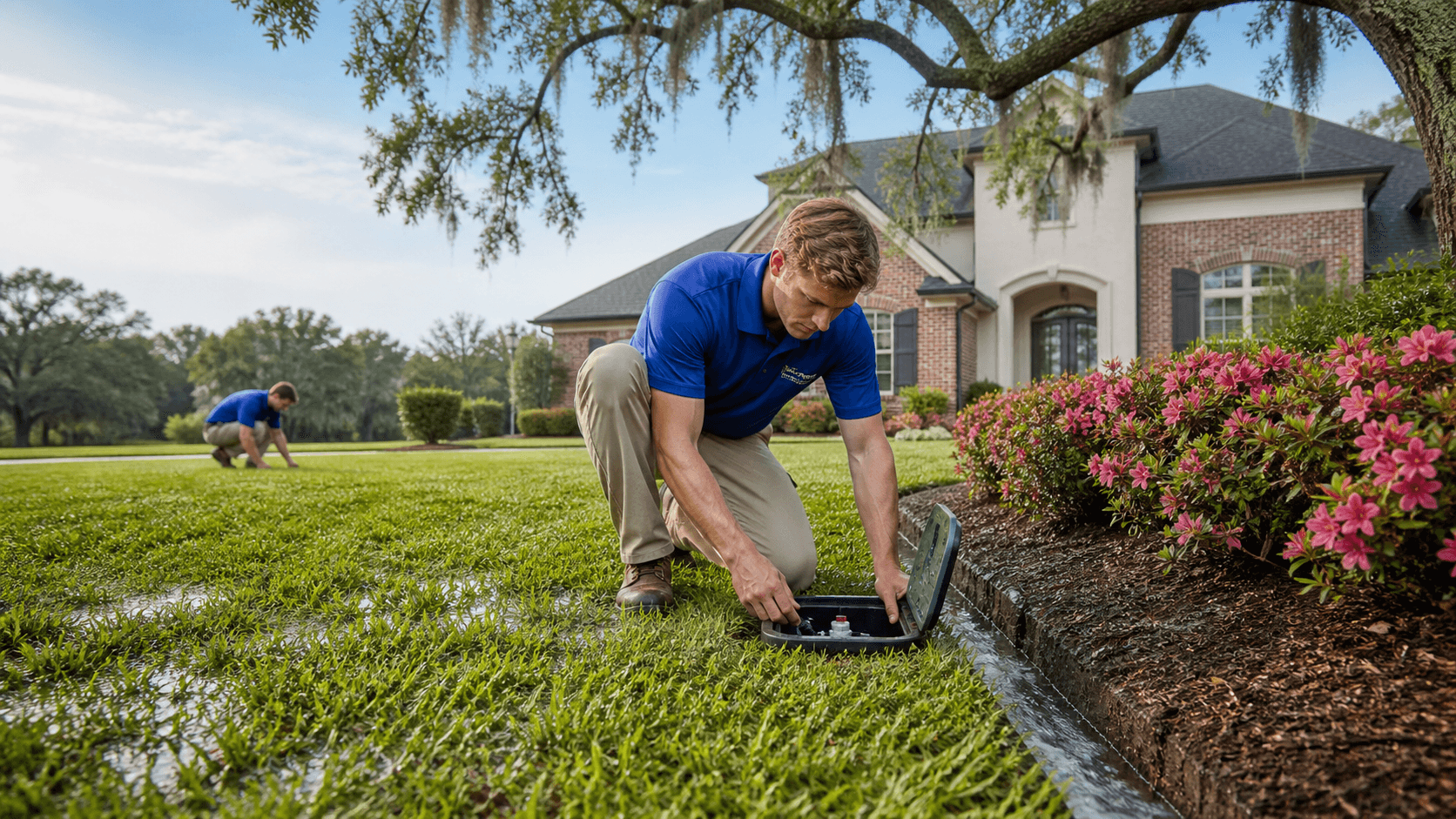
In many irrigation-heavy neighborhoods in Gainesville and St. Augustine, small changes to run times, zone timing, and coverage can make a big difference. Fine-tuning these systems helps lawns recover while cutting down on wasted water.
Feeding and Repairing Your Lawn After the Heat
Fall fertilization is one of the best tools for lawn care in Gainesville. The air starts to cool a bit, but the soil stays warm. That means roots can keep growing and storing energy, even if you do not see a lot of new leaf growth on top.
A targeted fall feeding helps your lawn:
- Repair summer damage below the surface
- Store nutrients for better color and density later
- Build stronger roots before the slower months
Not all fertilizers work the same. A slow-release product that is suited to our local soils and turf types gives steady nutrition without surges of weak, fast growth. When lawns are stressed from summer, too much fertilizer or the wrong blend can burn the grass, push soft growth, and invite more disease.
For repair work, simple steps go a long way:
- Light topdressing on thin areas to improve soil contact
- Seeding or plugging where your grass type allows it
- Raking out dead, matted thatch that blocks air and water
- Replacing badly damaged patches of St. Augustinegrass
If one area of turf always struggles, it is often a clue. Shade from trees, heavy foot traffic, dog paths, or poor irrigation coverage can keep that spot weak no matter how much you feed it. A good recovery plan looks at how your family uses the yard, how sun hits during the day, and how water moves through the soil, then builds steps around that.
Stopping Fall Pests and Diseases Before They Spread
Late summer into fall is prime time for several North Florida lawn problems. The days are still warm, nights cool just a bit, and humidity hangs in the air. That mix is perfect for some pests and fungi.
Common issues this time of year include:
- Brown Patch or Large Patch disease in damp, overwatered areas
- Chinch bugs that linger in hot, sunny St. Augustinegrass spots
- Sod webworms and armyworms chewing on already stressed turf
Early signs to watch for:
- Brown or yellow circles with a darker edge that looks like a ring, a warning sign of Brown Patch
- Expanding "drought" areas that do not perk up after watering, which often points to chinch bugs
- Freshly chewed leaf blades and small green caterpillars hiding in the thatch layer, a sign of sod webworms
Homeowners can take a few simple, safe steps to reduce pressure:
- Avoid late evening watering, so leaves are not wet all night
- Fix low, soggy spots to improve drainage
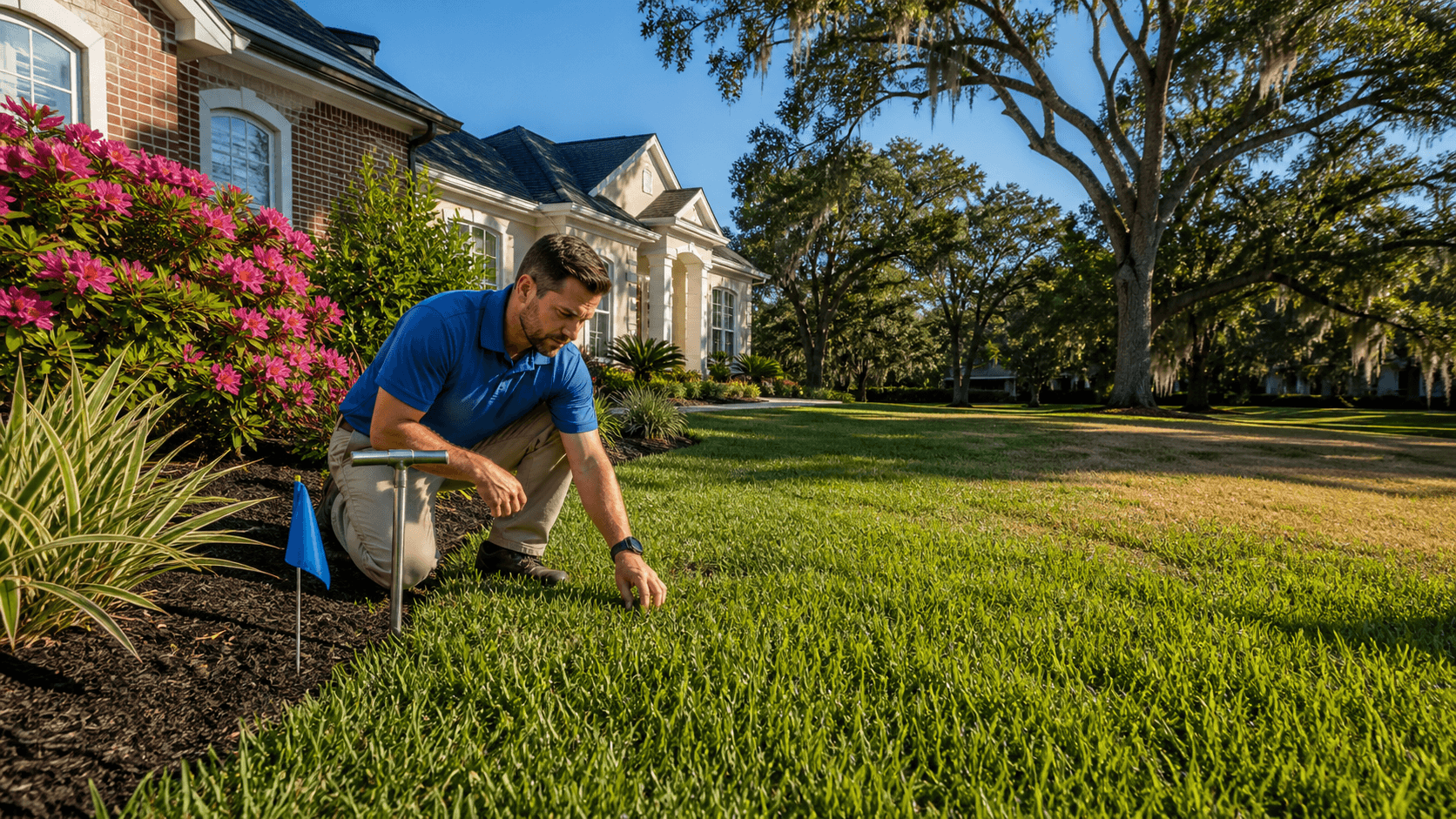
- Do quick "tug tests" on affected grass; if the blades pull up easily with rotted roots, disease may be at work
Guessing with store-bought products can lead to wasted time and money, and sometimes more damage. Careful diagnosis, along with pest and disease controls suited to our North Florida grass types, helps protect the yard while keeping kids and pets in mind.
Set Your Lawn up Now for a Better Spring
The work you put into post-summer recovery in September and October pays off when spring arrives. When the grass has time to heal now, you get fewer weeds, fewer thin patches, and a lawn that greens up faster and stays healthier.
A simple early fall checklist can help:
- Walk your yard and note thin, soggy, or discolored areas
- Raise your mowing height to match your grass type
- Adjust irrigation for shorter days and cooler nights
- Plan one well-timed fall fertilization suited to local lawns
- Watch closely for chinch bugs, Brown Patch, and webworms over the next several weeks
At The Master's Lawn & Pest, we work every day with yards in Gainesville, St. Augustine, and Palm Coast that go through the same local stress your lawn does. Many homeowners choose ongoing professional care for more predictable results, fewer surprises, and more time to enjoy being outside instead of worrying about what is going wrong in the grass. Even if summer was hard on your yard, there is still a good window this fall to turn things around and set your lawn up for years of healthier growth.
Transform Your Gainesville Lawn Into a Space You Love
If you are ready to stop guessing about yard care and start seeing consistent, healthy growth, we are here to help. At The Master's Lawn & Pest, our team can tailor lawn care in Gainesville to the unique conditions of your property so you get results that last. Tell us about your lawn goals and we will recommend a clear, practical plan to get you there. Have questions or want to schedule a visit? Simply contact us to get started.