Get Clear Answers to Your Ponte Vedra Lawn Questions
A Ponte Vedra yard does not act like lawns in other parts of the country. Our coastal breeze, salty air, sandy soil, and nearly year-round growing season change how grass and pests behave. If your lawn feels like a mystery, you are not alone.
We talk with Ponte Vedra homeowners every week who ask the same core questions about their grass, their sprinklers, and the bugs trying to move inside. In this article, we are walking through those real questions in simple language. You will learn what is happening in your yard, why it happens here, a few smart steps you can take, and where a local team can step in when you want help.
The Master's Lawn & Pest, formerly The Master's Lawn Care, has spent years working in North Florida neighborhoods, including Ponte Vedra, St. Augustine, Gainesville, Palm Coast, and nearby areas. We have seen what our salty winds, heavy rains, and humid afternoons do to lawns, landscapes, and pests, and we design our services with those conditions in mind.
What kind of grass grows best in Ponte Vedra yards
Most Ponte Vedra lawns use one of three warm-season grasses: St. Augustine, zoysia, or Bermuda. Each one can look great here, but the best choice depends on your yard and how you live in it.
Here is a quick guide:
- St. Augustine: Common in coastal neighborhoods, does well in our heat, and handles some shade. It is wide-bladed and feels soft under bare feet.
- Zoysia: Dense, good for high-traffic lawns where kids or pets play, and can have a nice, tidy look. It likes sun and consistent care.
- Bermuda: Often used in very sunny, open yards. It can handle heavy use and can look very neat when cared for correctly.
Our sandy coastal soils drain fast and do not hold nutrients well. Salt from air and irrigation can also stress grass, especially near the beach or in yards with ocean breeze exposure. That means grass needs:
- Deeper roots, not shallow ones
- Less frequent but deeper watering
- Fertilizer that is timed and blended for local soil
If you want a low-maintenance, "good enough" lawn, we may lean toward certain St. Augustine varieties. If you want a more manicured, golf-course type look, zoysia or Bermuda may fit better. At The Master's Lawn & Pest, we always look at sun and shade patterns, irrigation, and how you use your yard before suggesting a plan.
Why My Lawn Has Brown Patches, Weeds, or Bare Spots
Brown areas and thin spots are some of the most common problems we see in lawn care in Ponte Vedra. The same few causes show up again and again.
Fungus is a big one, especially when we get warm, wet weather and long stretches of humidity. Lawn diseases often start as small discolored areas that slowly spread. Overwatering, poor drainage, or watering late in the evening can make fungus worse.
Chinch bugs are another headache, especially in St. Augustine grass. They feed on the grass blades and suck out plant juices, leaving:
- Irregular brown patches
- Areas that do not respond to extra water
- Spots that may start near hot, sunny edges like sidewalks or driveways
We also see damage from:
- Compacted soil in high-traffic zones
- Very sandy spots that do not hold nutrients or moisture
- Irrigation coverage issues that create dry "missed" spots
Seasonal weather adds to the stress. Late summer storms and tropical systems often mean heavy rain followed by bright sun. That mix pushes weeds, encourages fungus, and can wash nutrients away. Many Ponte Vedra homeowners choose ongoing lawn care that includes regular fertilization, weed control, and monitoring for insects and disease, so small issues get caught before they turn into large dead areas.
How Often to Water and Fertilize a Ponte Vedra Lawn
Because our coastal soils are sandy, water drains quickly. Light daily watering only wets the top layer of soil, which encourages shallow roots and weak grass. Deep, less frequent watering helps the roots grow down where moisture lasts longer.
A simple watering approach for most Ponte Vedra lawns is:
- Water early in the morning so grass dries out during the day
- Aim for deeper watering on set days, not a quick sprinkle every day
- Cut back after heavy rains to avoid fungus
- Follow any city or neighborhood watering rules
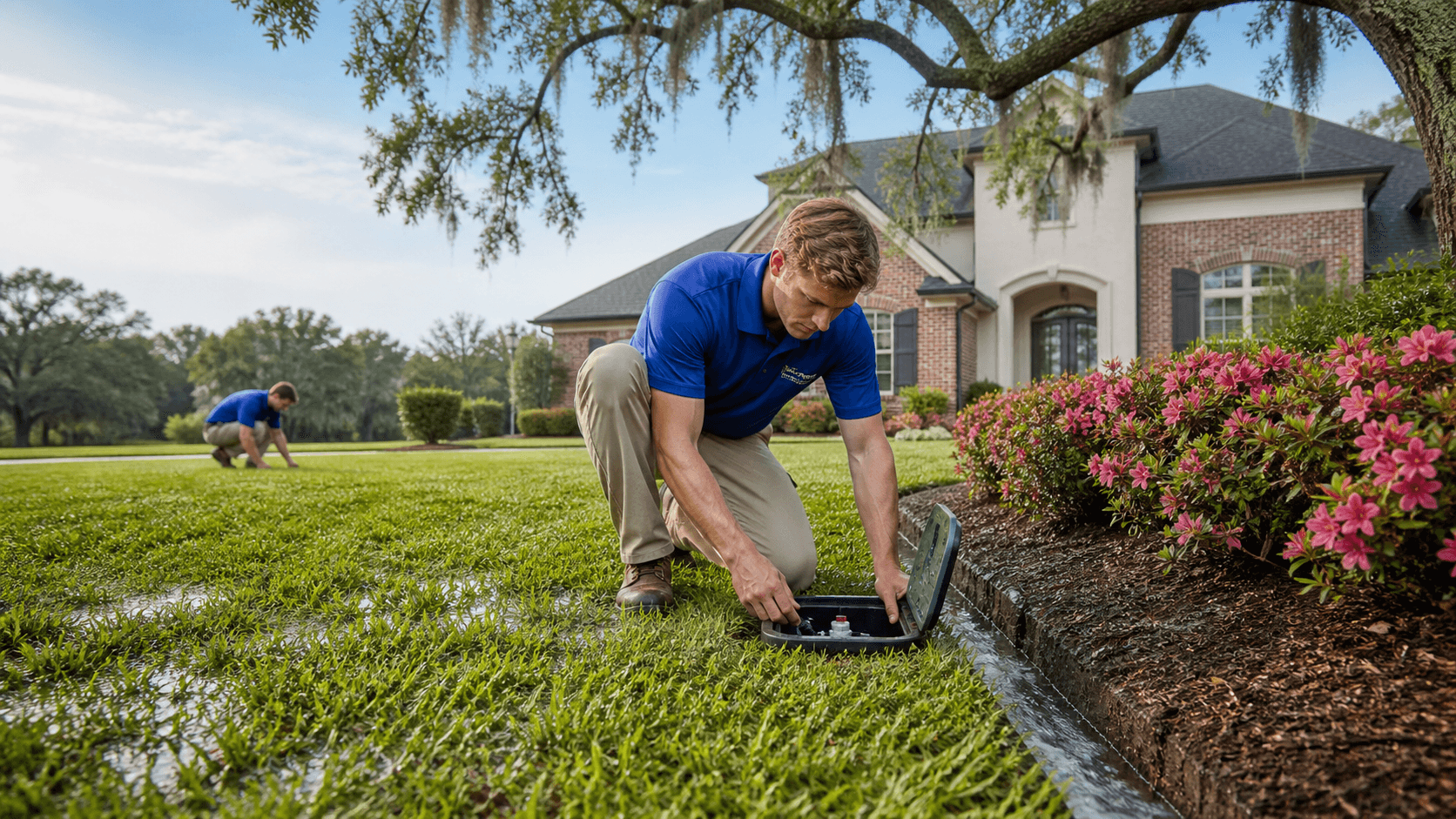
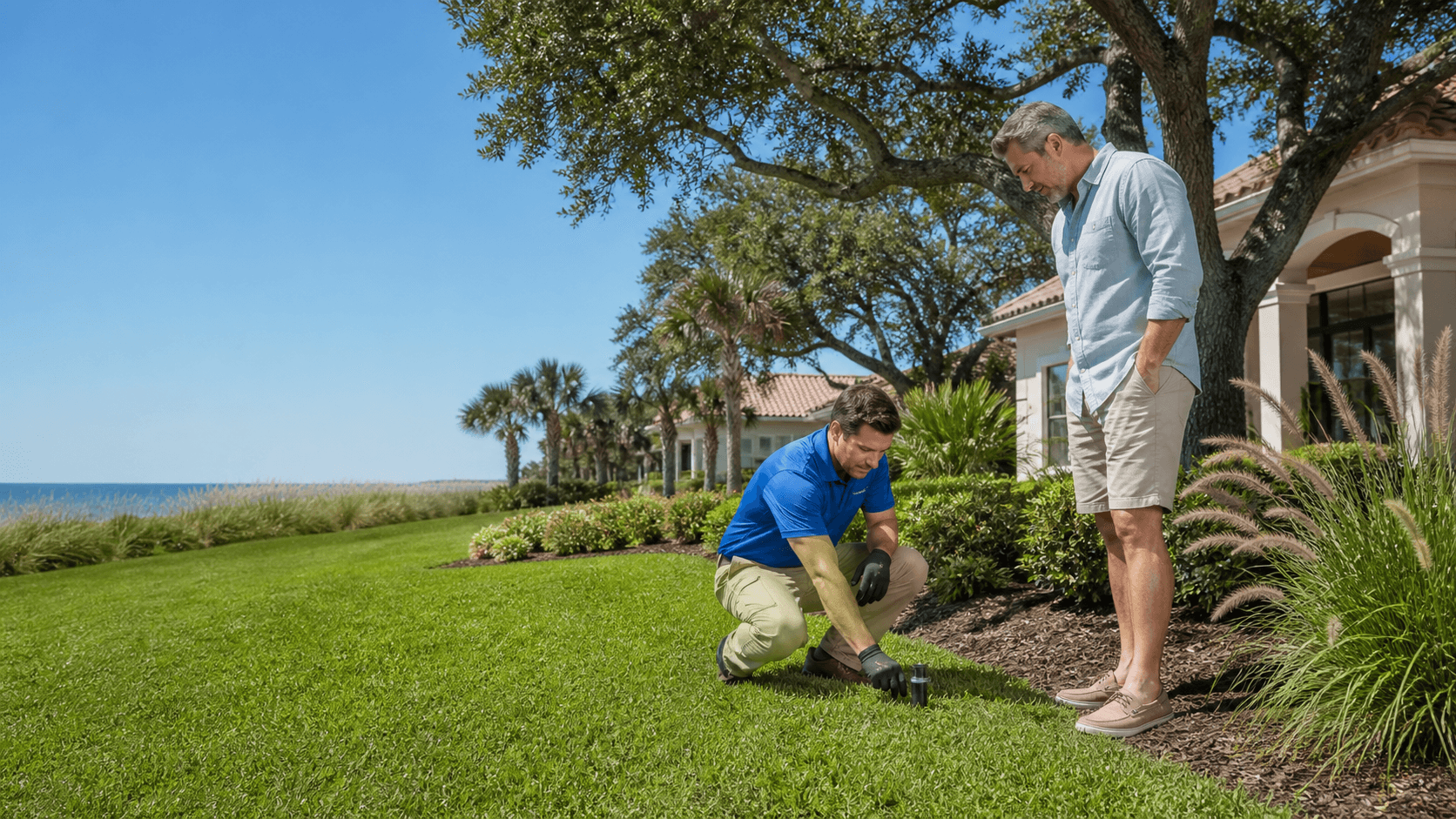
Irrigation systems can drift out of adjustment over time. Heads get knocked crooked, zones get clogged, or timers do not match the season. A quick check every few months helps make sure the right areas are covered without overwatering.
For fertilization, timing matters as much as the products. A typical pattern for our area includes:
- Early spring: Support green-up and steady growth after winter stress
- Early to mid-summer: Feed the lawn so it holds up to heat and foot traffic
- Late summer to early fall: Prepare grass for shorter days and the change in growth
At The Master's Lawn & Pest, we use fertilizer blends designed for North Florida lawns, including our sandy, coastal conditions. The goal is steady, healthy growth instead of fast, weak flushes that attract pests and disease.
What Keeps Bugs, Ants, and Roaches Out of My Home
North Florida's warmth and moisture are great for lawns, but they are also great for bugs. Ants, palmetto bugs, spiders, and roaches all enjoy mulch beds, shaded foundation areas, and thick landscaping close to the house.
It helps to think about two different pest zones:
- Lawn and landscape pests: Chinch bugs, fire ants, mole crickets, and other insects that live in the turf or beds
- Home pests: Ants, roaches, spiders, and other critters that try to move from the yard into your house
Both zones affect each other. If your yard is full of ants, you are more likely to see them trail toward the kitchen. If mulch is piled high against the foundation, roaches and spiders have a perfect hiding spot right next to entry points.
Our approach at The Master's Lawn & Pest focuses on:
- Regular exterior barrier treatments around the house
- Targeted interior service only where needed
- Landscape and lawn treatments that reduce pest pressure outdoors
Simple home habits help too. Sealing gaps around doors and windows, keeping mulch a bit lower near the foundation, trimming plants away from walls, and avoiding standing water all make a difference. This way, you keep pests under control without relying on heavy product use inside.
How to Prepare Your Yard for Fall in Ponte Vedra
Late August and early fall in Ponte Vedra bring a mix of lingering heat, afternoon storms, and shorter days. Grass is still growing, but pests and diseases can shift as the light changes.
A simple late-summer checklist includes:
- Mowing at the proper height for your grass type, not too short
- Checking irrigation timing and coverage, especially after power outages or big storms
- Watching for fungus or new brown patches after several rainy days
- Treating fire ants so fall outdoor activities are more comfortable
This time of year is also a good chance to tune up your landscaping and outdoor lighting. Trimming overgrown plants away from the house walls can improve airflow and reduce pest hiding spots. Adjusting or repairing outdoor lighting helps with safety and makes upcoming football watch parties and holiday evenings more enjoyable.
If you want a hand getting everything in sync, a fall yard tune-up from a local team can help your lawn, irrigation, and lighting work together instead of fighting each other. At The Master's Lawn & Pest, we look at the whole property, from grass to beds to perimeter pest control, so your Ponte Vedra home is ready for the next season with fewer surprises.
Transform Your Ponte Vedra Lawn With Expert Local Care
If you are ready for a healthier, greener yard without the guesswork, our team at The Master's Lawn & Pest is here to help. Explore how our tailored lawn care in Ponte Vedra can solve your specific lawn challenges and improve your curb appeal. Have questions or want to schedule a visit? Simply contact us and we will walk you through the next steps.