Stop Pests Before They Invade Your Gainesville Home
Gainesville yards stay green and active almost all year, which is great for your lawn and plants but also very attractive to bugs. Many of the pests that end up in your kitchen or bathroom actually start outside in the grass, mulch, and around the foundation of your home. If you only treat inside, you are chasing the problem instead of cutting it off at the source.
The key to smart Gainesville pest control is managing that border zone where your lawn, beds, and house all meet. When that area is healthy, dry, and well managed, pests have a harder time moving in. When it is damp, cluttered, and overgrown, they get an easy bridge straight indoors.
In this article, we will walk through what tends to attract pests around North Florida homes, which trouble spots most people miss, and how targeted outdoor treatments work. Our goal is to help you protect your family, pets, and curb appeal without turning your yard into a chemical zone.
Why North Florida Yards Attract So Many Pests
Our area has a long growing season, frequent summer showers, and sandy soil that drains fast but can still hold moisture in low spots. That mix is perfect for lawns and landscaping, and also perfect for insects that love warmth and humidity. When your yard is active, it naturally supports a lot of insect life.
Certain yard features make things worse by giving pests food, water, and shelter right next to your home. Common examples include:
Thick mulch and foundation plantings pressed tight against the house
Overwatered turf that never really dries out
Wood piles and bags of soil stored by the wall
Leaf litter, toys, or clutter stacked along the foundation
These areas are very inviting for:
Ants, including fire ants and tiny sugar ants that follow food and moisture trails
Roaches hiding in mulch, drainage areas, and under debris
Spiders, palmetto bugs, millipedes, and other occasional invaders
Lawn pests like mole crickets and chinch bugs that damage turf and attract predators
When the lawn and landscape are stressed or messy, pests multiply outside and then start looking for cool, safe, air-conditioned shelter inside. A healthy, well-managed yard becomes your first layer of Gainesville pest control long before you ever see a bug in the house.
Foundation Trouble Zones Most Homeowners Miss
If you walk slowly around the outside of a typical North Florida home, you will see several hot spots where lawn pests turn into house pests. These areas are easy to overlook because they blend into your normal landscaping.
Common trouble zones include:
Mulch piled high against stucco or siding
Dense shrubs or vines touching the walls and covering weep holes
Cracks in stucco, gaps around pipes, cable lines, and hose bibs
AC pads, irrigation boxes, and low corners where water hangs around after rain
Each one acts like a bridge from the turf to your living room. Mulch holds moisture and gives roaches and ants a cool place to nest. Shrubs that touch the wall create shaded highways for insects to travel and hide. Cracks, gaps, and unsealed penetrations turn into tiny doors.
There are some simple, lower-effort habits that can make a real difference, such as:
Keeping a small visible gap between mulch and the foundation
Trimming shrubs 12 to 18 inches away from walls for airflow and visibility
Sealing obvious cracks and gaps and installing door sweeps where light shows through
Cleaning leaves and storm debris away from the house after big summer storms
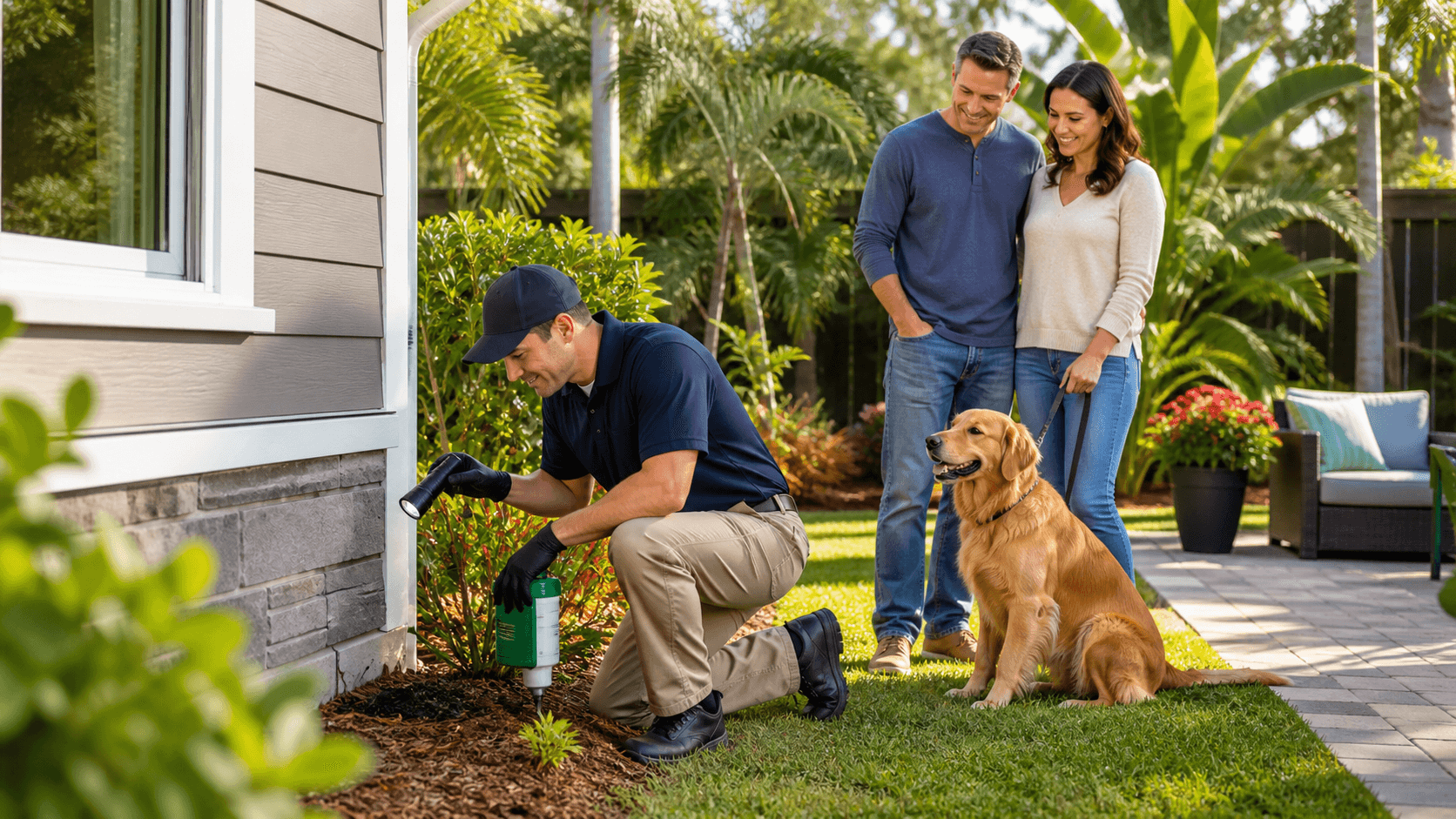
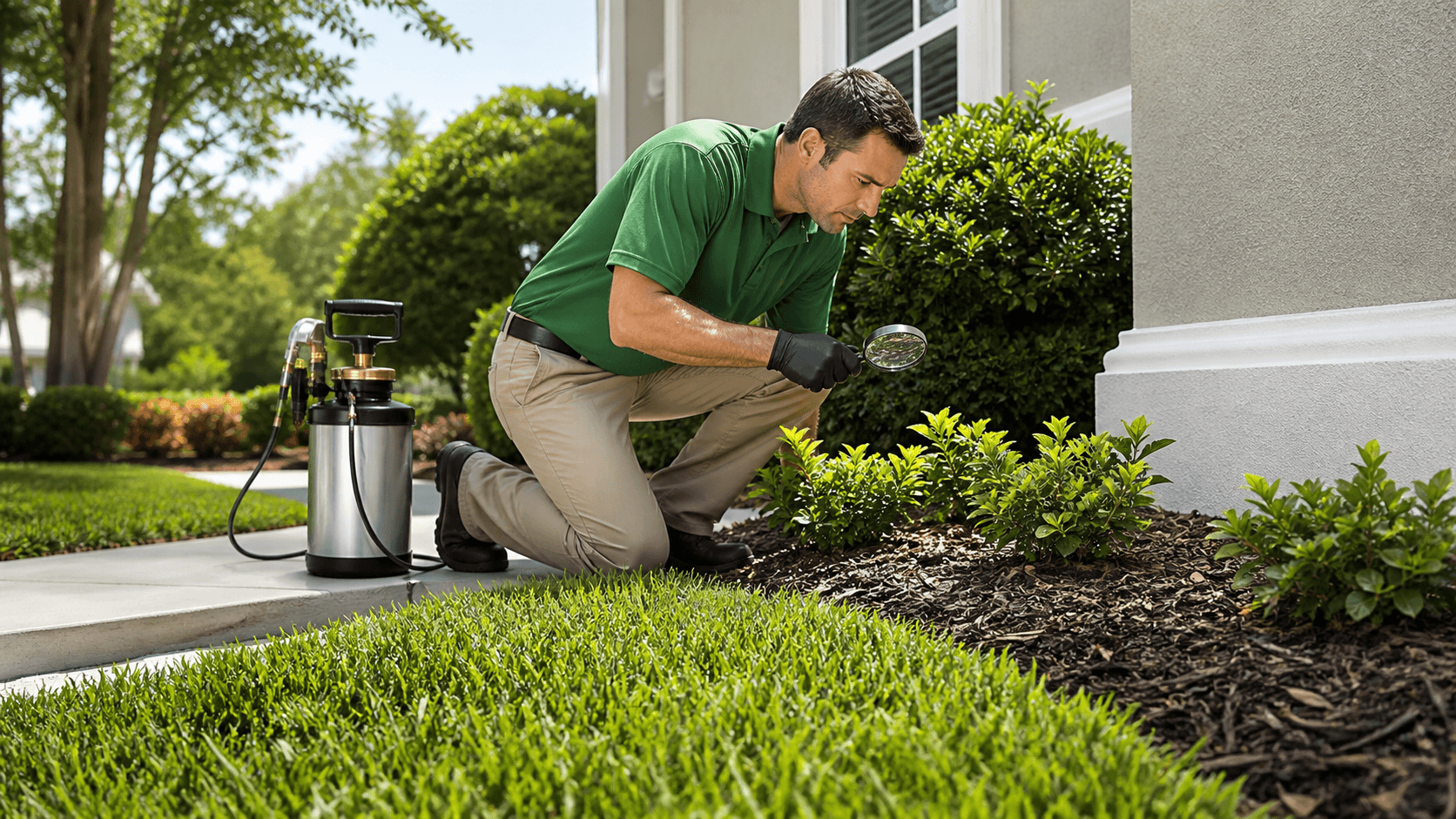
A trained Gainesville pest control technician adds another layer by spotting entry points you might miss, looking for subtle tunneling or nesting signs, and suggesting targeted treatments in the right places.
Smart Gainesville Pest Control Around Lawns and Beds
Many people think of pest control as "spray everywhere and hope for the best." That approach wastes product and still leaves gaps. A targeted lawn and foundation program focuses on where pests actually nest and travel instead of only where they are seen.
A smart plan around your home usually includes the following:
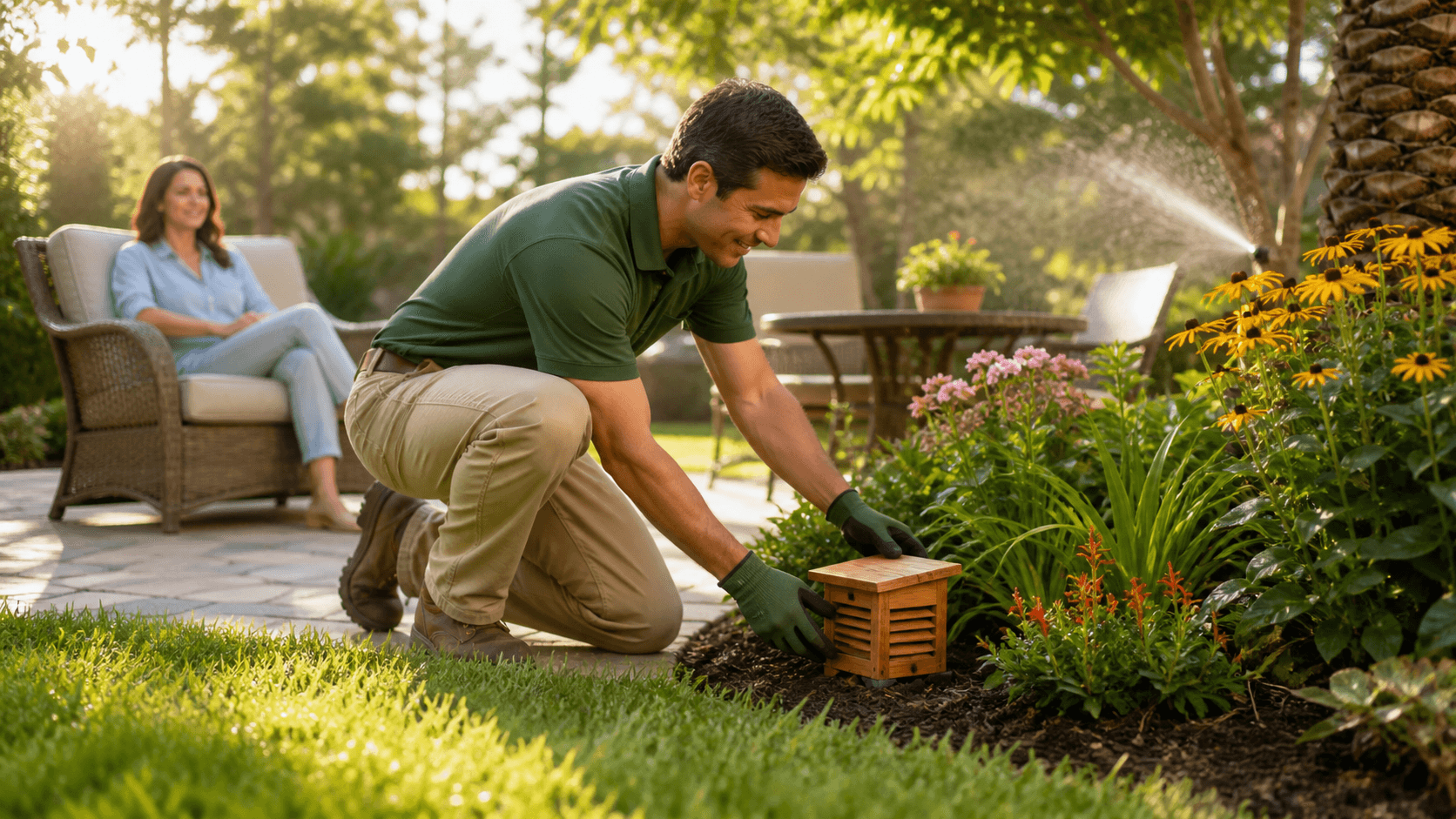
Baits in active ant and roach zones so pests carry control back to the colony
Careful barrier treatments along the exterior foundation and entry points
Spot sprays in harborage areas like mulch beds, cracks, and utility areas
This is part of an approach called integrated pest management. It works especially well in North Florida when it follows a simple pattern:
Inspect: Identify which pests are active and where they are coming from
Correct: Adjust watering, mowing height, mulch depth, and plant spacing to make the yard less comfortable for them
Treat: Apply products precisely around the exterior, in beds, and in the lawn where pests start
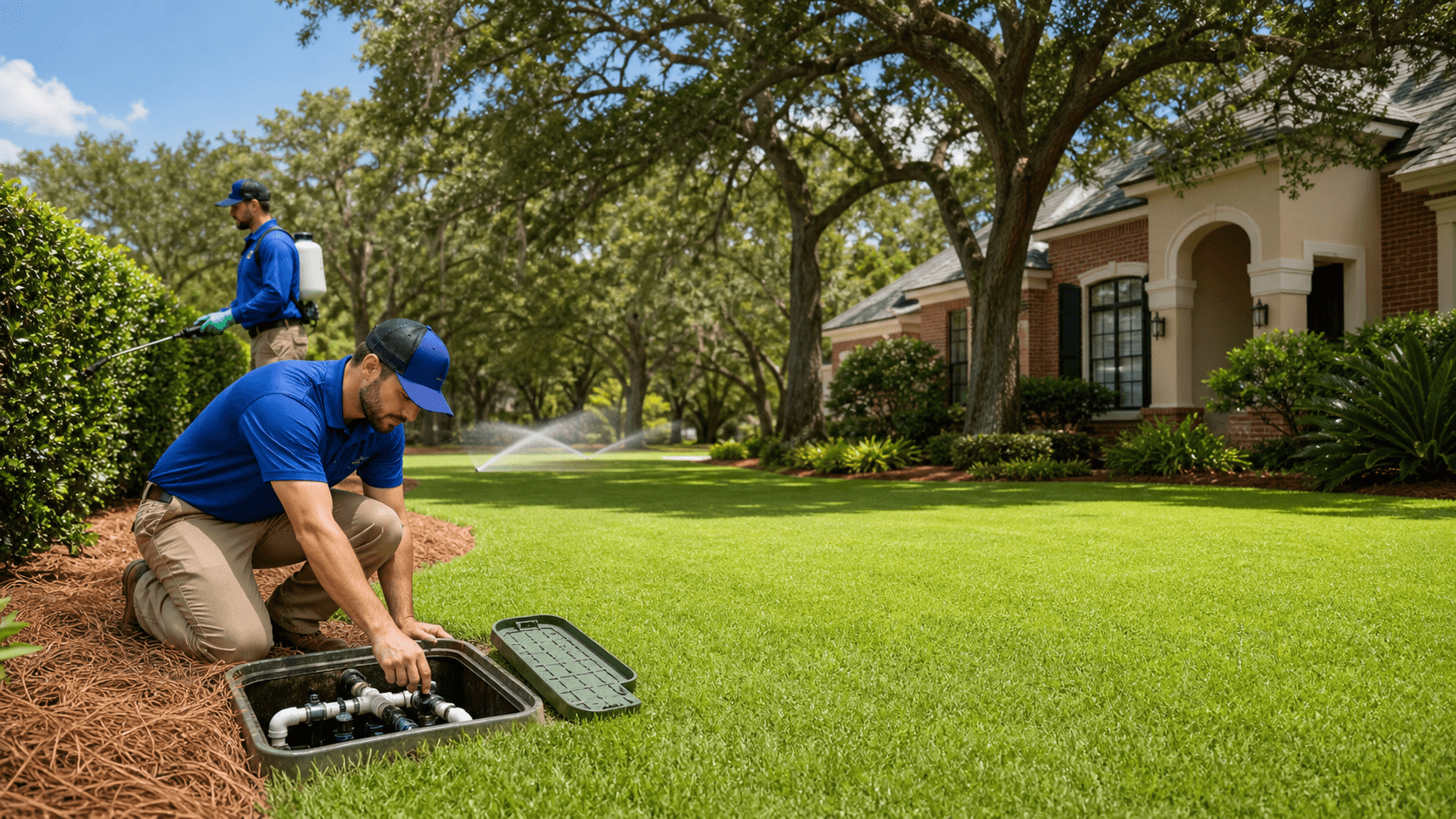
Summer timing matters. Heavy afternoon rains can wash away products that are not applied correctly. Warm, humid nights keep bugs active, so a regular treatment schedule helps hold the line. Local technicians who understand our soils and neighborhoods can line up lawn care, irrigation, and pest work so each one supports the others.
Lawn Health Habits That Quietly Reduce Pest Pressure
Pests love weak, patchy turf. Bare spots, thin grass, and heavy thatch give them hiding places and easy food. A well-maintained lawn is not just about looks; it also makes your yard less friendly to insects.
A few local lawn habits that help pest pressure include:
Mowing at the right height for your grass type so the soil is shaded and weeds are limited
Watering deeply but not every day, early in the morning so the surface dries out between cycles
Avoiding heavy fertilizer pushes in the peak of summer that can leave soft growth pests like to chew
Irrigation and drainage play a big part too. Leaky sprinkler heads that constantly soak the strip of soil next to your house invite ants and roaches. Low spots that stay soggy after a shower become great breeding areas for biting insects.
When lawn care and Gainesville pest control work together, treatments do not fight each other. Adjusted watering, better drainage, and proper mowing support the exterior barrier instead of washing it away or covering it with thatch and debris.
Simple Steps to Protect Kids, Pets, and Peace of Mind
Safety is always top of mind for families in our area. Modern professional products are designed to work in very specific ways and can be placed where pests live and travel, not where kids and pets spend most of their time. When used by licensed technicians and applied according to the label, they stay focused along foundations, cracks, gaps, and targeted lawn areas.
If you want to start tightening up your home's defenses this weekend, a quick checklist looks like this:
Walk the full perimeter and clear debris, toys, and yard waste from the walls
Trim plants off the house and look for ant mounds or insect trails along the foundation
Check irrigation heads near the home for leaks or misdirected spray and adjust run times
Make a note of any spots where you always see ants, roaches, or other pests after a rain
There comes a point when store products and quick fixes are not enough. If you keep seeing ant trails or roaches even after trying sprays, notice damage to turf or plants, or watch pests bounce back right after heavy rains, that is a sign you may need a more complete Gainesville pest control plan that starts in the lawn and around the foundation and works its way out.
Protect Your Gainesville Home With Targeted Pest Solutions
If you are noticing unwanted pests around your property, our team at The Master's Lawn & Pest is ready to help restore your peace of mind with customized Gainesville pest control treatments. We focus on finding the source of the problem so we can eliminate current infestations and help prevent future ones. Reach out today and let us design a plan that fits your home and your schedule, or contact us with any questions about your specific pest concerns.