How Smart Lawn Care Shapes Pest Behavior in Gainesville
Healthy lawn care in Gainesville is not just about green grass. The way you mow, water, and plant around your home quietly changes how ants, roaches, mosquitoes, and other pests move and where they decide to live.
Many North Florida homeowners keep treating for bugs around the house but do not realize their lawn and landscaping choices are actually helping those pests. When turf is thin, mulch is piled high, or sprinklers keep things soggy, you are building pest highways straight to your doors and windows.
In our warm, humid climate, lawn care and pest control are connected. In this article, we will look at how lawn density, moisture management, and landscaping near your foundation work together to lower pest pressure and make your yard more comfortable for kids and pets.
Why Gainesville Lawns Attract So Many Pests
North Florida is almost paradise for bugs. We have:
- High humidity that keeps soils and mulch damp
- Warm weather most of the year
- Sandy soils that dry on top but hold moisture in pockets
- irrigation-heavy neighborhoods where lawns get watered often
Those conditions are perfect for common pests such as:
- Ants, including fire ants, that nest in sunny, disturbed turf
- Chinch bugs and mole crickets that thin out St. Augustinegrass
- Roaches, earwigs, and centipedes that hide in mulch and shady beds
- Mosquitoes that breed in low spots, wet turf, and standing water
When lawn care in Gainesville skips the details, pests take advantage. For example:
- Thin, patchy turf leaves bare soil, which ants love for building mounds
- Overgrown grass and thick thatch create cover for insects to feed and hide
- Overwatering or poor drainage keeps soil damp, which draws mosquitoes and moisture-loving pests closer to the house
The big idea is simple: your yard can either invite pests in or quietly push them away. The choices you make with mowing, watering, and planting decide which way it goes.
Lawn Density and Mowing Habits That Deter Pests
A dense lawn is more than a pretty view from the porch. Thick turf is one of the best defenders you have against many insects.
When St. Augustinegrass or other local turf types are full and healthy:
- The grass shades the soil surface, making it less friendly for many ground pests
- Bare patches shrink, so ants have fewer spots to mound and weeds have fewer spots to sprout
- Strong roots help grass recover from stress, which leaves fewer weak areas for pests to move into
Mowing habits in Gainesville often decide whether turf thickens or thins out. Helpful habits include:
- Keeping St. Augustinegrass taller than many people think, so you do not stress it and cause thinning
- Sharpening mower blades so they cut cleanly instead of tearing and opening weak spots
- Avoiding scalping, especially on edges and slopes, which creates bare soil pests use as paths
It also helps to manage thatch and compaction so roots can grow deeper. When soil is less compacted and thatch is under control, your lawn can:
- Take in water more evenly
- Stand up better to chinch bugs and other turf insects
- Fill in faster when small damaged areas appear
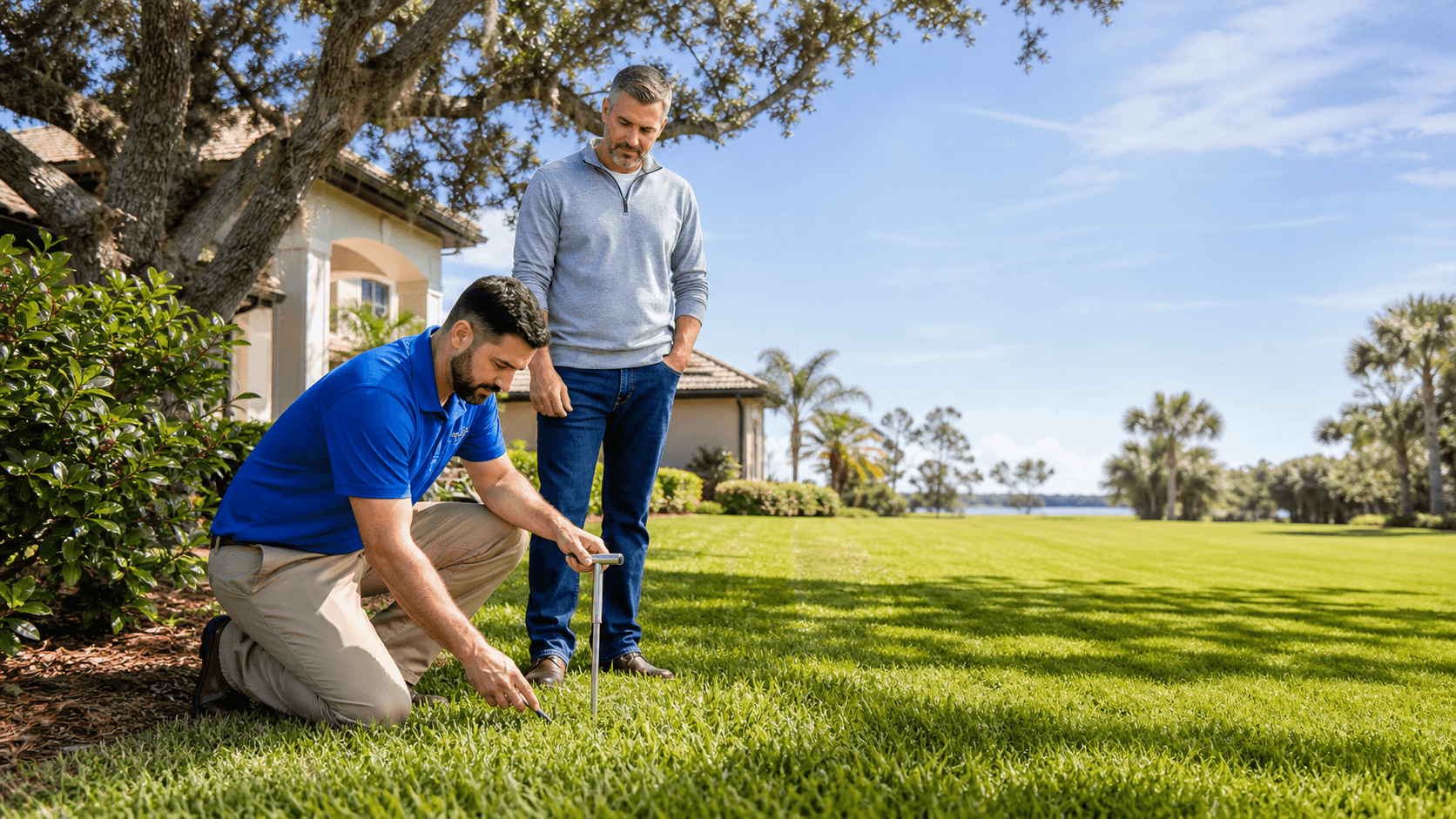
Professional lawn care in Gainesville supports all of this. With custom fertilization and weed control that match North Florida grass types, we can promote thicker turf that naturally competes with weeds and makes life harder for many pests. Licensed technicians can also spot early signs of turf insects or disease that would thin out your lawn and create more pest-friendly conditions.
The result is not just nicer curb appeal. A dense lawn slowly turns your yard into a place where pests have fewer places to hide and fewer reasons to hang around.
Moisture Management That Does Not Invite Mosquitoes and Ants
In our climate, moisture acts like a steering wheel for pest movement. Where water goes, many bugs follow.
Ants and roaches often track along moist lines into:
- Mulched beds that stay damp
- Shady corners near AC units and hose bibs
- The foundation area, where tiny cracks and gaps lead indoors
Mosquitoes only need small, still pockets of water to breed. In many Gainesville yards, they use:
- Poorly drained low spots in turf
- Areas that get overwatered by sprinklers
- Clogged gutters and saucers around the home
- Overly wet mulch that never really dries out
To shift the odds in your favor, irrigation and drainage should be tuned carefully. Good habits include:
- Watering early in the morning so leaves dry during the day
- Choosing deeper, less frequent watering instead of short daily cycles that keep the surface constantly damp
- Fixing low spots and adjusting downspouts that dump water at the foundation
- Reducing overspray that hits walls, windows, and patios
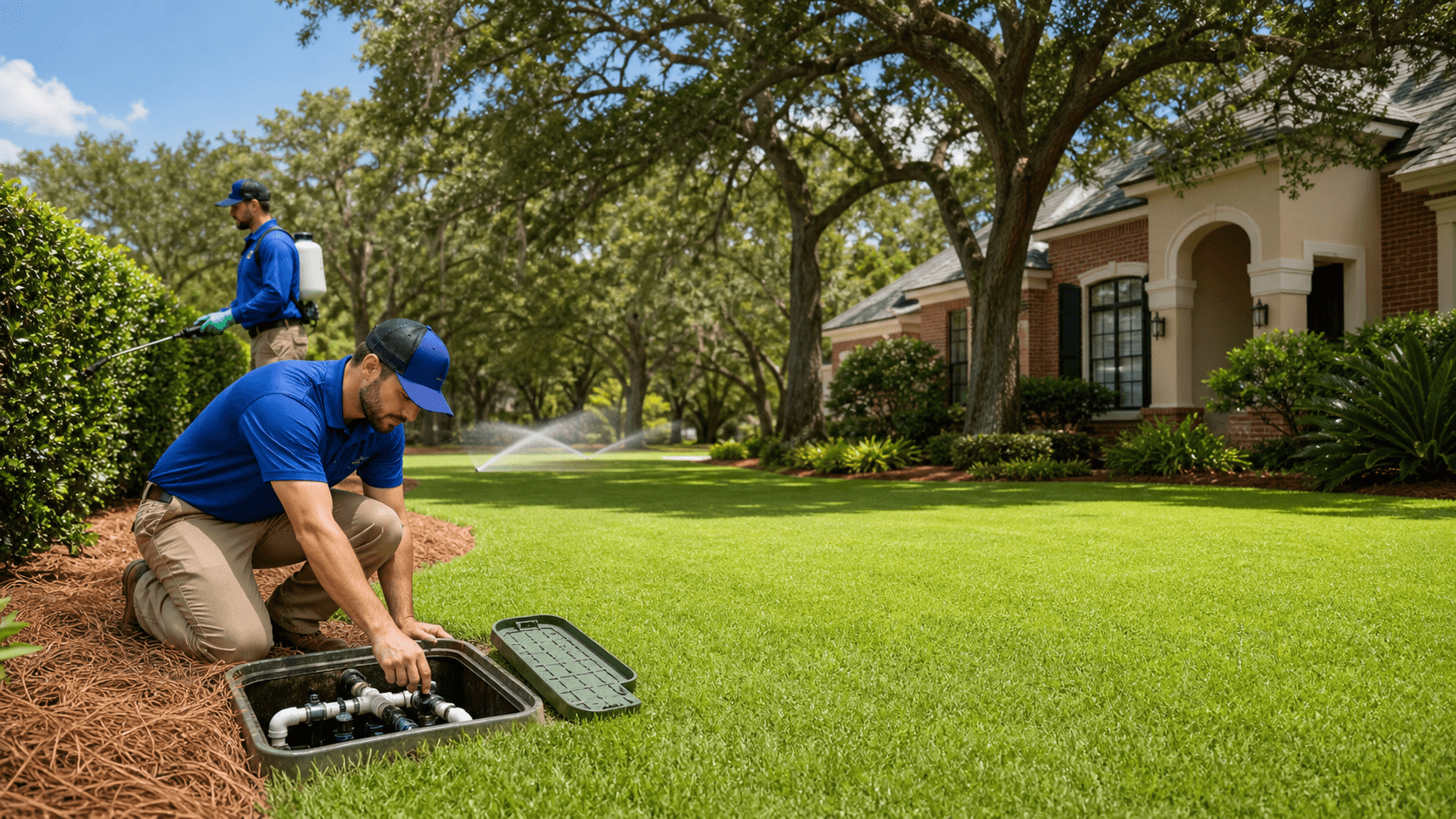
When we design and adjust irrigation systems, we look at water from both a lawn and pest angle. That means we:
- Evaluate sprinkler coverage so it is not pooling near walkways, patios, and foundation plantings
- Set different run times by zone so shady or low areas do not stay soggy
- Help tell the difference between a true insect problem and a moisture problem that is attracting pests
The goal is a lawn that is well watered but not waterlogged. That way, grass gets what it needs, and pests do not get a free buffet and breeding ground.
Foundation Beds, Mulch, and Plant Spacing to Keep Bugs Out
The beds around your foundation act like on-ramps for pests. The layout, mulch, and plant spacing all change how easily insects can move from the yard to your walls.
Common problem setups include:
- Dense shrubs pressed right against the house, which create shady, humid tunnels for roaches, spiders, and ants
- Thick mulch piled high against the foundation, which stays soft and moist and gives pests an easy bridge into cracks and gaps
- Vines or plants touching siding and windows, which work like ladders for insects and even small rodents
Safer foundation design is usually simple and does not hurt the look of your home. Good guidelines are:
- Keep a small gap between plants and the house so air and sunlight can dry the soil and surfaces
- Use a moderate mulch depth, usually around a few inches, and do not bury the foundation or siding line
- Choose plant varieties that fit the space so they do not quickly overgrow windows, AC units, utility boxes, or hose bibs
Thoughtful lawn care in Gainesville includes regular bed maintenance, not just mowing. When beds are trimmed and cleaned on a steady schedule, we can:
- Break up pest hiding spots before they spread
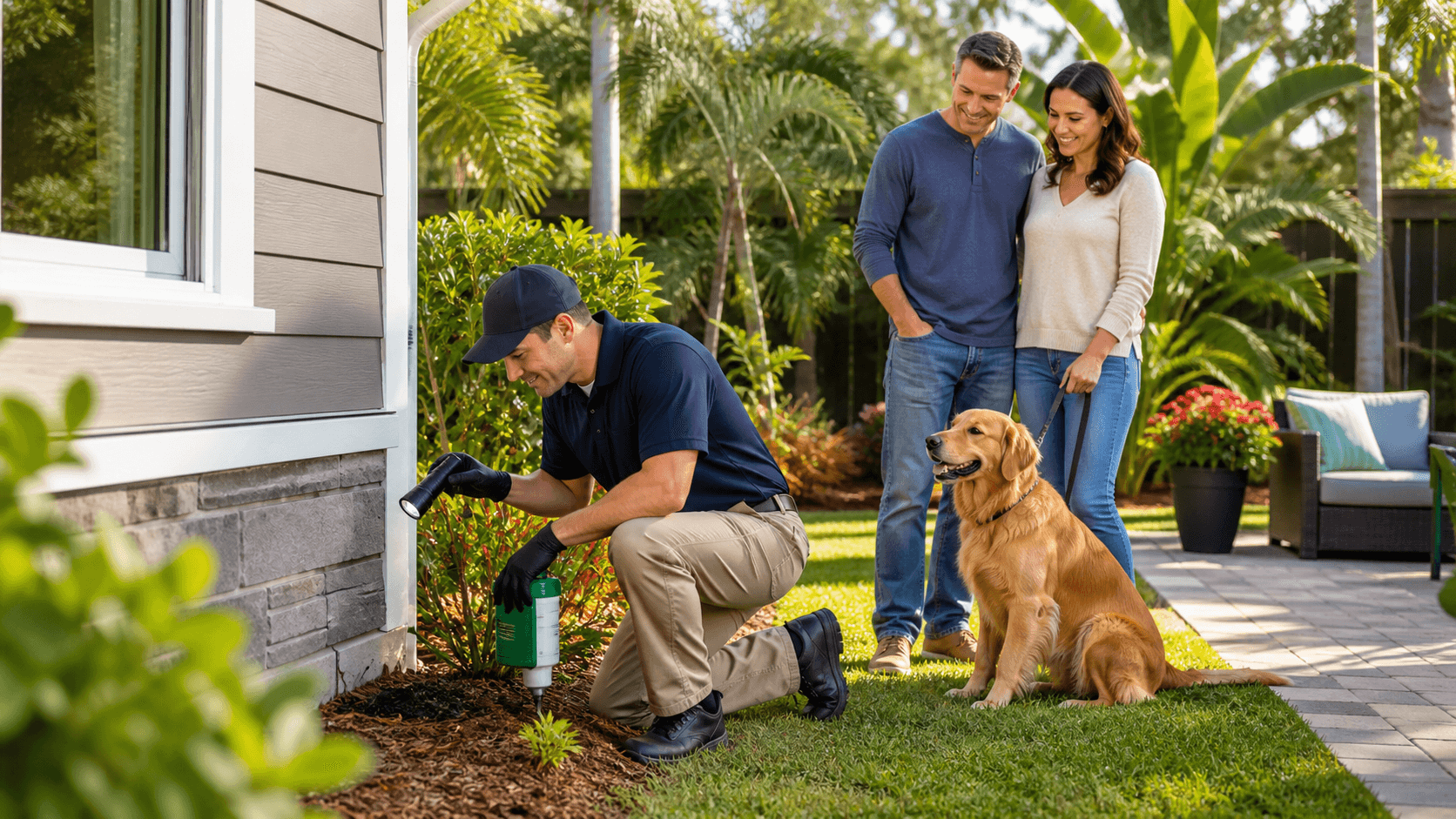
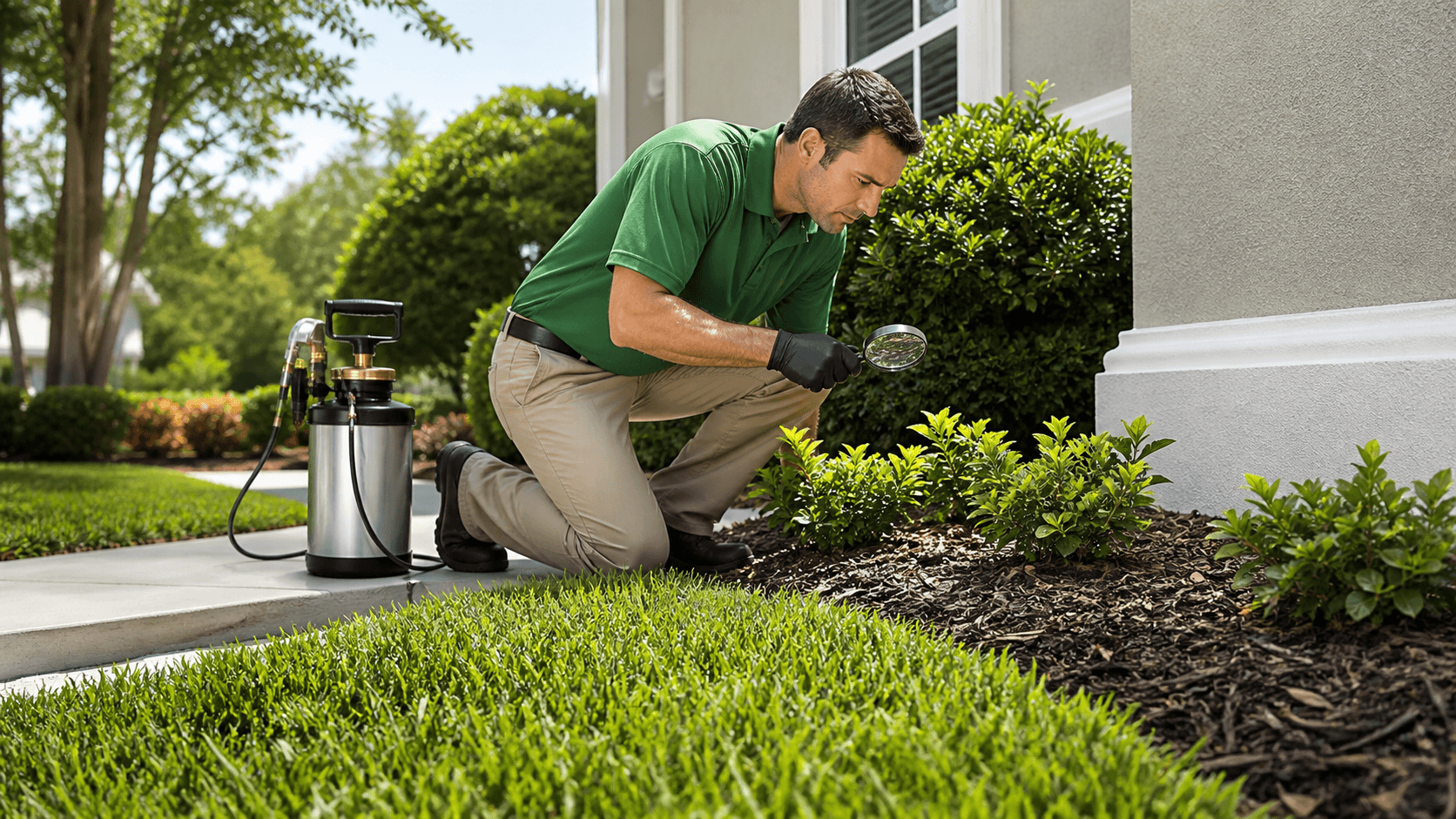
- Keep edging and bed lines defined so ant trails, termite tubes, and other warning signs are easier to spot
- Line up mulch choices, pruning timing, and perimeter pest treatments so they support each other instead of working against each other
Often, small changes like lowering mulch, thinning one overgrown shrub, or moving a plant away from a window lead to noticeably fewer bugs near doors, lights, and entry points.
Bringing Lawn and Pest Plans Together for a Calmer Yard
When lawn density, moisture, and foundation beds are all managed with pests in mind, your home becomes much less attractive to insects and other critters. You get a lawn that looks good and a yard that simply feels calmer and more comfortable.
For most Gainesville homeowners, the key action steps are simple:
- Aim for dense, well-cut turf instead of short, stressed grass
- Adjust watering so you avoid soggy areas and standing water
- Rework mulch depth, plant spacing, and crowded foundation beds that act like pest highways
At The Master's Lawn & Pest, we focus on this kind of integrated approach for homeowners in Gainesville, St. Augustine, and Palm Coast. Our local, licensed team understands North Florida soils, grass types, irrigation patterns, and the pests that come with them. By blending lawn treatments, irrigation tuning, and thoughtful landscape care, we help create yards that are healthier, easier to live with, and naturally tougher on pests.
Transform Your Gainesville Lawn Into a Healthier, Greener Space
If you are ready for a yard that looks great and is easier to maintain, we are here to help. At The Master's Lawn & Pest, our team delivers tailored lawn care in Gainesville that fits your property's specific needs. Tell us about your lawn goals and we will create a customized plan to get your grass, plants, and outdoor spaces in top shape. Have questions or want to schedule a visit? Just contact us and we will follow up promptly.